


Stem cells and advanced tissue engineering for regenerative medicine
2021年1月25日〜1月28日WEB
Stem cells and advanced tissue engineering for regenerative medicine
2021年1月25日〜1月28日WEB
[7]Generation of human intervertebral disc progenitor cells: from induced pluripotent stem cells on the road to disc organoids
○Anne Camus(Senior researcher (CRCN CNRS), INSERM UMR 1229, RMeS, Université de Nantes, ONIRIS)
Education:
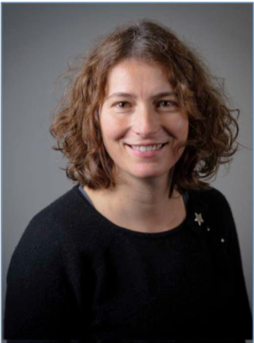
Anne Camus, PhD, studied Genetics and Embryology at University Paris XI, followed by a PhD with C. Babinet, at the Pasteur Institute, Paris, France. In 1997, she carried out postdoctoral training with P. Tam at the Children’s Medical Research Institute, Sydney, Australia. In 2000, she joined J. Collignon in the Jacques Monod Institute, Paris. In 2001, she was appointed as senior scientist at C.N.R.S. She has a long-standing interest in deciphering basic mechanisms that regulate cell fates and tissue patterning during embryogenesis and in stem cells differentiation studies. In 2013, she joined, the Regenerative medicine and skeleton research lab -INSERM UMR1229-RMeS- in Nantes, France, headed by J. Guicheux, as the "Stem Cells and Axial Skeleton Development" group leader. Her current research focuses on studying the cellular and molecular mechanisms of axial skeleton development using genetic tools in the mouse model to address the biological causes of disc degeneration and on human stem cells tissue engineering to develop innovative regenerative strategies for the intervertebral disc. She is developing systems biology approaches to identify gene networks and signaling pathways associated with notochordal cells differentiation as progenitors and regulators of the intervertebral disc in human and mouse. She is co-leading work related to the development of stem cell-based strategies for regenerative medicine in iPSpine H2020- SC1-BHC-09-2018 European project. She is coordinating the “DevStem” scientific cluster at Nantes University to promote regional collaboration between researchers and strengthen the developmental and stem cell biology field.
Low back pain is one of the most common musculoskeletal disorders often (40%) associated to the degeneration of the intervertebral disc. There is no effective treatment for this disease that leads to irreversible deterioration of disc function. This is largely due to a lack of basic knowledge of the molecular and cellular controls of disc development, growth and differentiation during embryogenesis and at different stages of life.
The founder cells of the centre of the disc, originate from an axial embryonic structure, the notochord. After birth, these notochord cells have matured and behave as key regulators to keep the disc healthy. With ageing or injury, the observation is made that notochordal cells disappear leaving room for imbalance and tissue degeneration. Increasing research studies have demonstrated that native notochord cells exert rejuvenating effects on degenerated disc. As such, a better understanding of human notochord biology has great potential in disc degenerative disease and as a regenerative-cell source.
By translating fundamental knowledge from mouse developmental biology to human pluripotent stem cells research, we developed a two-step method to generate a stable human notochord-like population with a distinct molecular signature (RNA-Sequencing DGE-seq). Time-course analysis of lineage-specific markers shows that WNT pathway activation and transfection of the notochord-related transcription factor NOTO are sufficient to induce high levels of mesendoderm progenitors and favour their commitment toward notochordal lineage instead of paraxial and lateral mesodermal or endodermal lineages. Our work advances the understanding of the regulatory network controlling human notochord cell fate and differentiation program.
We pursue our research efforts to identify key molecules associated with cell fate decisions, morphogenesis and maturation of the notochordal cells that may also be essential players for healthy adult disc maintenance. In particular we investigate the intricate role between signalling pathways, tissue growth and mechanical forces using specific scaffold mimicking healthy disc characteristics in 3D models as steps toward the disc organoid. Program [PDF]
The founder cells of the centre of the disc, originate from an axial embryonic structure, the notochord. After birth, these notochord cells have matured and behave as key regulators to keep the disc healthy. With ageing or injury, the observation is made that notochordal cells disappear leaving room for imbalance and tissue degeneration. Increasing research studies have demonstrated that native notochord cells exert rejuvenating effects on degenerated disc. As such, a better understanding of human notochord biology has great potential in disc degenerative disease and as a regenerative-cell source.
By translating fundamental knowledge from mouse developmental biology to human pluripotent stem cells research, we developed a two-step method to generate a stable human notochord-like population with a distinct molecular signature (RNA-Sequencing DGE-seq). Time-course analysis of lineage-specific markers shows that WNT pathway activation and transfection of the notochord-related transcription factor NOTO are sufficient to induce high levels of mesendoderm progenitors and favour their commitment toward notochordal lineage instead of paraxial and lateral mesodermal or endodermal lineages. Our work advances the understanding of the regulatory network controlling human notochord cell fate and differentiation program.
We pursue our research efforts to identify key molecules associated with cell fate decisions, morphogenesis and maturation of the notochordal cells that may also be essential players for healthy adult disc maintenance. In particular we investigate the intricate role between signalling pathways, tissue growth and mechanical forces using specific scaffold mimicking healthy disc characteristics in 3D models as steps toward the disc organoid. Program [PDF]