


Stem cells and advanced tissue engineering for regenerative medicine
2021年1月25日〜1月28日WEB
Stem cells and advanced tissue engineering for regenerative medicine
2021年1月25日〜1月28日WEB
[9]Stem cell-based therapies for osteoarthritis
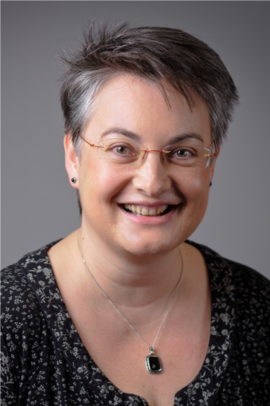
○Catherine Le Visage(Professor, University of Nantes)
Education:
Catherine Le Visage (Research Director, 71 publications in ISI-indexed journals, h-index 29, 2000 citations, 11 patents) is the Deputy Director of the Regenerative Medicine and Skeleton (RMeS) laboratory, headed by J. Guicheux at the University of Nantes, France (www.rmes.univ-nantes.fr). She was trained as a Pharmacist and received her PhD in Pharmaceutical Technologies in 1999. She then performed a post-doctoral training in the BME Department of the Johns Hopkins University (Baltimore, USA) in Prof. K. Leong’s laboratory with a focus on focus on stem cells regenerative approaches for intervertebral disc (IVD).
In 2007, she joined with a tenured position the French National Institute of Health and Medical Research (INSERM) to investigate chemically cross-linked polysaccharide hydrogels. Her most recent works have focused on innovative hydrogels as i) carriers of cells or bioactive molecules in the context of IVD disease and osteoarthritis and ii) tools for stem cell-based organogenesis.
She coordinates 1 ANR (EXCELLDISC 2020-2024), 1 Regional program (SHELBY 2018-2022), and is a co-PI in 1 ANR France/Switzerland (INDEED 2020-2024) and 1 H2020 European project (iPSpine 2019-2023). She has coordinated 1 EuroNanomed (POSTURE 2015-2018) and 1 ANR France-Singapore (NMVASC 2011-2015). She is an elected member of the TERMIS-EU Council and has been appointed Chair of the communication committee. She gave 60 invited lectures/seminars at national and international conferences.
Osteoarthritis (OA), the most common inflammatory and degenerative joint disease, is a multifaceted rheumatic disease that has become a major socio-economic problem in industrialized societies. A large proportion of this burden is due to hip and knee OA, with prevalent cases of 300 million in the world. OA is characterized by progressive alterations, including cartilage erosion, subchondral bone remodeling, and synovial inflammation. Despite the disability and the significant impairment of quality of life, existing therapeutic solutions provide symptomatic relief of pain at best but fail to prevent joint tissue damages.
Mesenchymal Stromal Cells (MSCs), derived from bone marrow or fat tissue, have recently been proposed as a relevant therapeutic approach to prevent joint OA. MSCs have been contemplated for their protective effect on chondrocytes, their anti-inflammatory and immunoregulatory properties. In this presentation, we will highligth the pre-clinical and clinical studies that have shown that IA injection of MSCs in OA knees was safe and well-tolerated. Unfortunately, the issue of MSC long-term persistence in an OA joint has been raised, since IA injection suffers from 2 limitations, i.e a massive cell death after injection, and cell leakage outside of the articular space.
In this context, cell protection in biocompatible and permeable hydrogels has been envisioned as a way to i) protect the MSCs and enhance their local retention, ii) provide a suitable microenvironment supporting their biological activity, and (iii) extend the diseased tissue exposure to MSC-derived anti-OA molecules. We will first review conventional microencapsulation approaches with natural polymers (hyaluronic acid, alginate) as well as droplet-based microfluidics and micromolding ones. We will then present our recent studies where we demonstrated that alginate microparticles support human MSC viability and ability to sense and respond to a pro-inflammatory environment (TNF/INF, pathological synovial fluids). The anti-OA efficacy of encapsulated MSCs in a post-traumatic osteoarthritis model in rabbits will also be discussed. Finally, this stimuli-sensitive cell-based system, able to provide an “on-demand” release of biological factors could pave the way of future developments for a wide variety of inflammation-, age- and trauma-associated disorders particularly for osteoarticular tissues including, bone, tendons, ligaments and intervertebral disc. Program [PDF]
Mesenchymal Stromal Cells (MSCs), derived from bone marrow or fat tissue, have recently been proposed as a relevant therapeutic approach to prevent joint OA. MSCs have been contemplated for their protective effect on chondrocytes, their anti-inflammatory and immunoregulatory properties. In this presentation, we will highligth the pre-clinical and clinical studies that have shown that IA injection of MSCs in OA knees was safe and well-tolerated. Unfortunately, the issue of MSC long-term persistence in an OA joint has been raised, since IA injection suffers from 2 limitations, i.e a massive cell death after injection, and cell leakage outside of the articular space.
In this context, cell protection in biocompatible and permeable hydrogels has been envisioned as a way to i) protect the MSCs and enhance their local retention, ii) provide a suitable microenvironment supporting their biological activity, and (iii) extend the diseased tissue exposure to MSC-derived anti-OA molecules. We will first review conventional microencapsulation approaches with natural polymers (hyaluronic acid, alginate) as well as droplet-based microfluidics and micromolding ones. We will then present our recent studies where we demonstrated that alginate microparticles support human MSC viability and ability to sense and respond to a pro-inflammatory environment (TNF/INF, pathological synovial fluids). The anti-OA efficacy of encapsulated MSCs in a post-traumatic osteoarthritis model in rabbits will also be discussed. Finally, this stimuli-sensitive cell-based system, able to provide an “on-demand” release of biological factors could pave the way of future developments for a wide variety of inflammation-, age- and trauma-associated disorders particularly for osteoarticular tissues including, bone, tendons, ligaments and intervertebral disc. Program [PDF]