


セッション詳細
[1-PD7]パネルディスカッション7 『(国際委員会企画)Receiving International EMTs in Japan: Coordination Mechanisms and the Roles of Government and NGO Teams』
2026年3月19日(木) 16:40 〜 18:10
第5会場(3F 中会議室301)
座長:久保 達彦(広島大学公衆衛生学/京都大学ヘルスセキュリティセンター)
豊國 義樹(国立健康危機管理研究機構 危機管理・運営局 DMAT事務局)
豊國 義樹(国立健康危機管理研究機構 危機管理・運営局 DMAT事務局)
【1-PD7】
International Committee Session;
Receiving International EMTs in Japan: Coordination Mechanisms and the Roles of Government and NGO Teams
パネルディスカッション7
国際委員会企画「国際受援と国際支援の融合」
Title:
Building Japan’s Capacity to Receive International Medical Assistance: Roles and Coordination of Government and NGO Medical Teams in Major Earthquakes
Moderator:
1. Tatsuhiko Kubo, M.D., Ph.D
Professor, Department of Public Health, Graduate School of Biomedical and Health Sciences, Hiroshima University / Professor, Interdisciplinary Program in Health Emergency and Crisis Management
2. Yoshiki Toyokuni, Ph.D
Japan DMAT Secretariat, Japan Institute for Health Security
Session Overview:
In recent years, the environment surrounding international disaster medical response has changed significantly. In Japan, the anticipated occurrence of large-scale disasters such as a Nankai Trough earthquake has highlighted the importance of preparing systems to receive medical support from overseas. While Japan has accumulated substantial experience as a country that deploys medical teams internationally, there is now a growing need to apply this experience systematically to the domestic framework for receiving international assistance. The 31st Annual Meeting of the Japanese Association for Disaster Medicine is held under the main theme “Disaster Medicine as a Science,” emphasizing the examination and organization of disaster response experiences so that they can be translated into practical systems and operations for future events. In line with this theme, this session aims to share knowledge gained through international reception exercises, tabletop and field simulations, and inter-organizational collaboration conducted by the International Committee, and to clarify practical issues that must be addressed in preparation for future large-scale disasters. The session will begin with an overview by the Japan DMAT Secretariat on Japan’s current framework and challenges for receiving international medical teams. This will be followed by contributions from government-deployed international medical teams from Australia, Taiwan, and the United States, as well as from non-governmental medical teams active in Japan and abroad. These speakers will present perspectives based on scenarios in which they would operate within Japan during a major disaster. The discussion will focus on the overall institutional and operational framework required to receive international assistance, and on how coordination and cooperation should be achieved when multiple organizations are working simultaneously. In particular, the session will examine how government-deployed medical teams and NGO medical teams, each with distinct strengths, can divide roles appropriately and function in a complementary manner during a large-scale earthquake. Through this session, the roles, characteristics, and conditions for effective collaboration between government and NGO medical teams will be clarified in an accessible manner. The ultimate aim is to identify key challenges and future directions for building a realistic and effective system for receiving international medical assistance in Japan.
セッション概要(日本語)
近年、国際災害医療を取り巻く環境は大きく変化している。日本においても、南海トラフ巨大地震などの発生が想定される中、海外から医療チームの支援を受け入れる体制をあらかじめ整えておくことが、重要な課題となっている。これまで日本は、災害発生時に医療チームを海外へ派遣する立場として多くの経験を積み重ねてきたが、今後はそうした経験を、国内で支援を受ける際の仕組みづくりに生かしていくことが求められている。
第31回日本災害医学会総会・学術集会は、「災害を科学する」をメインテーマに掲げ、災害対応の経験を整理・検証し、制度や運用として次の災害に生かすことを重視している。本企画は、この趣旨を踏まえ、国際委員会がこれまで実施してきた国際受援訓練や演習、関係機関との連携を通じて得られた知見を共有し、将来の大規模災害に備えるための実務的な課題を明らかにすることを目的としている。
本セッションでは、日本DMAT事務局から、日本が海外医療チームを受け入れる際の体制や現在の課題について概説した後、政府が派遣する国際医療チーム(オーストラリア、台湾、米国)および日本国内外で活動するNGO医療チームを招き、日本での活動を想定した視点から意見を共有いただく。
議論の中心となるのは、災害時に海外からの支援を受け入れるために必要な制度や運用の全体像と、複数の組織が同時に活動する状況において、どのように連携や調整を行うべきかという点である。特に、大規模地震が発生した場合を想定し、国として派遣される医療チームと、独自の強みを持つNGO医療チームが、それぞれの特性を生かしながら、どのように役割を分担し、互いを補い合うことが望ましいのかを検討する。
本セッションを通じて、国チームとNGOチームの役割や協働の考え方をわかりやすく整理し、日本における現実的で実効性のある国際受援体制の構築に向けた課題と今後の方向性を示すことを目指す。
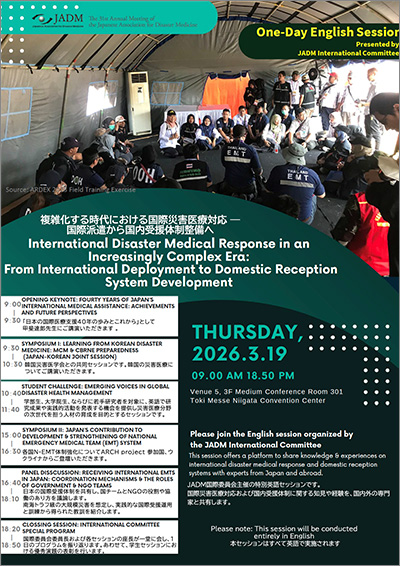
International Committee Session;
Receiving International EMTs in Japan: Coordination Mechanisms and the Roles of Government and NGO Teams
パネルディスカッション7
国際委員会企画「国際受援と国際支援の融合」
Title:
Building Japan’s Capacity to Receive International Medical Assistance: Roles and Coordination of Government and NGO Medical Teams in Major Earthquakes
Moderator:
1. Tatsuhiko Kubo, M.D., Ph.D
Professor, Department of Public Health, Graduate School of Biomedical and Health Sciences, Hiroshima University / Professor, Interdisciplinary Program in Health Emergency and Crisis Management
2. Yoshiki Toyokuni, Ph.D
Japan DMAT Secretariat, Japan Institute for Health Security
Session Overview:
In recent years, the environment surrounding international disaster medical response has changed significantly. In Japan, the anticipated occurrence of large-scale disasters such as a Nankai Trough earthquake has highlighted the importance of preparing systems to receive medical support from overseas. While Japan has accumulated substantial experience as a country that deploys medical teams internationally, there is now a growing need to apply this experience systematically to the domestic framework for receiving international assistance. The 31st Annual Meeting of the Japanese Association for Disaster Medicine is held under the main theme “Disaster Medicine as a Science,” emphasizing the examination and organization of disaster response experiences so that they can be translated into practical systems and operations for future events. In line with this theme, this session aims to share knowledge gained through international reception exercises, tabletop and field simulations, and inter-organizational collaboration conducted by the International Committee, and to clarify practical issues that must be addressed in preparation for future large-scale disasters. The session will begin with an overview by the Japan DMAT Secretariat on Japan’s current framework and challenges for receiving international medical teams. This will be followed by contributions from government-deployed international medical teams from Australia, Taiwan, and the United States, as well as from non-governmental medical teams active in Japan and abroad. These speakers will present perspectives based on scenarios in which they would operate within Japan during a major disaster. The discussion will focus on the overall institutional and operational framework required to receive international assistance, and on how coordination and cooperation should be achieved when multiple organizations are working simultaneously. In particular, the session will examine how government-deployed medical teams and NGO medical teams, each with distinct strengths, can divide roles appropriately and function in a complementary manner during a large-scale earthquake. Through this session, the roles, characteristics, and conditions for effective collaboration between government and NGO medical teams will be clarified in an accessible manner. The ultimate aim is to identify key challenges and future directions for building a realistic and effective system for receiving international medical assistance in Japan.
セッション概要(日本語)
近年、国際災害医療を取り巻く環境は大きく変化している。日本においても、南海トラフ巨大地震などの発生が想定される中、海外から医療チームの支援を受け入れる体制をあらかじめ整えておくことが、重要な課題となっている。これまで日本は、災害発生時に医療チームを海外へ派遣する立場として多くの経験を積み重ねてきたが、今後はそうした経験を、国内で支援を受ける際の仕組みづくりに生かしていくことが求められている。
第31回日本災害医学会総会・学術集会は、「災害を科学する」をメインテーマに掲げ、災害対応の経験を整理・検証し、制度や運用として次の災害に生かすことを重視している。本企画は、この趣旨を踏まえ、国際委員会がこれまで実施してきた国際受援訓練や演習、関係機関との連携を通じて得られた知見を共有し、将来の大規模災害に備えるための実務的な課題を明らかにすることを目的としている。
本セッションでは、日本DMAT事務局から、日本が海外医療チームを受け入れる際の体制や現在の課題について概説した後、政府が派遣する国際医療チーム(オーストラリア、台湾、米国)および日本国内外で活動するNGO医療チームを招き、日本での活動を想定した視点から意見を共有いただく。
議論の中心となるのは、災害時に海外からの支援を受け入れるために必要な制度や運用の全体像と、複数の組織が同時に活動する状況において、どのように連携や調整を行うべきかという点である。特に、大規模地震が発生した場合を想定し、国として派遣される医療チームと、独自の強みを持つNGO医療チームが、それぞれの特性を生かしながら、どのように役割を分担し、互いを補い合うことが望ましいのかを検討する。
本セッションを通じて、国チームとNGOチームの役割や協働の考え方をわかりやすく整理し、日本における現実的で実効性のある国際受援体制の構築に向けた課題と今後の方向性を示すことを目指す。