Greetings
From November 26 to 28, 2026, the 17th Japan Earthquake Engineering Symposium (17JEES) will be held at Kumamoto-Jo (Kumamoto Castle) Hall in Kumamoto City. The 17JEES is organized by the Japan Association of Earthquake Engineering as the executive society, jointly hosted by a total of 12 societies: the Japan Society of Civil Engineers, the Architectural Institute of Japan, the Japanese Geotechnical Society, the Japan Society of Mechanical Engineers, the Seismological Society of Japan, the Institute of Social Safety Science, the Japanese Society for Active Fault Studies, the JApan Society for Disaster Information Studies, the Japan Society for Disaster Recovery and Revitalization, the Japan Society for Natural Disaster Science, and the City Planning Institute of Japan.
JEES is a prestigious symposium that has been continuously held for over 60 years, approximately once every four years since its first event in 1962, bringing together the latest research achievements and a diverse range of technical exhibitions related to earthquake engineering. This will be the 17th symposium, and since the year 2026 marks the 10th year after the 2016 Kumamoto earthquake, Kumamoto City has been decided as the venue. From the 1st to the 16th symposium, 11 were held in Tokyo, two in Yokohama, and one each in Tsukuba, Chiba, and Sendai, with only the 15th in Sendai and this one in Kumamoto being held outside the Kanto region in Japan.
The 15th JEES was held from December 6 to 8, 2018, at the Sendai International Center in Sendai City. As is well known, this was aimed at reflecting on society's recovery, restoration, and reconstruction following the Great East Japan Earthquake of 2011. The theme of the 15th JEES was "Considering Social Safety against Earthquakes: A Resilient Future Society in the Reconstruction of Disaster-Affected Areas," and lively discussions took place. The previous 16th JEES was held from November 23 to 25, 2023, in Yokohama City (Pacifico Yokohama North), and the upcoming 17th JEES will be held three years later. The 16th JEES marked an important milestone year as 2023 was the 100th year after the Great Kanto Earthquake of 1923, a significant point for considering earthquake disaster prevention and mitigation in our country. Under the theme "After 100 Years since the Great Kanto Earthquake: Considering Earthquake Engineering for the Next 100 Years - Learnt from the Past and Aiming for a Sustainable Society Prepared for Increasingly Severe Complex Disasters," nearly 1,000 participants gathered, making the symposium a great success.
However, immediately after the 16th JEES, on January 1, 2024, the Noto Peninsula earthquake occurred, causing a large number of casualties due to house collapses and landslides reminiscent of the 1995 Great Hanshin-Awaji Earthquake, and resulting in dysfunction of the infrastructure and lifelines in the affected areas. Devastating damage occurred in irreplaceable local communities that form the foundation of our daily lives, making recovery impossible. These regions, which were still in the process of recovery and reconstruction, were hit by heavy rain brought by a low-pressure system and a front from September 20 to 22, 2024. It has become an era in which contributions from earthquake engineering research are required not only for complex disasters combining strong ground motions, ground deformation, landslides, and tsunamis caused by the earthquake but also for the chain of earthquake and heavy rain disasters, as well as complex disasters involving earthquake damage and extreme heat.
From an international perspective, large earthquakes associated with the rupture of faults that have been studied for many years continue to occur in various regions around the world, causing many casualties and damage to social infrastructure. Examples include the earthquake in Hualien, Taiwan on April 3, 2024, the earthquake in Mandalay, Myanmar on March 28, 2025, and the earthquake near the Kamchatka Peninsula on July 30, 2025. The year 2025 marks the 30th year after the 1995 Great Hanshin-Awaji Earthquake, and 12 academic societies co-hosting the 17th JEES are organizing numerous events to review research activities over the past 30 years in their respective specialized academic fields.
It has only been three years since the last 16JEES, but we are now in a difficult era that demands a transformation of the conventional perspectives and values (paradigms) that we have become accustomed to. Although only three years have passed, the latest technologies involving digital transformation (DX), such as generative AI, have seen remarkable advancements and have become indispensable in research fields of earthquake engineering, including simulation and parameter identification. On the other hand, the population structure characterized by declining birthrates and aging has become extremely distorted, and the concentration of population in Tokyo along with the economic disparities between Tokyo and other regional and local cities have intensified. Under these conditions of labor shortages in the social structure, we must confront the reality of potential massive earthquakes anticipated in various regions. To straightforwardly acknowledge this national crisis and contribute, at least to some extent, from the perspective of earthquake disaster prevention and mitigation, it is essential to transcend the boundaries of the conventional academic specialized domains surrounding earthquake engineering, as symbolized by the 12 academic societies, collaborate, and personally carry out a paradigm shift in the research field of earthquake engineering. In Kumamoto City, which represents regional cities, and Kumamoto Prefecture, which looks vibrant from the perspective of the recent attraction of semiconductor factories and regional economy, we hope to think about the theme of this symposium, "10 Years since the Kumamoto Earthquake: Redefining Earthquake Engineering in the Era of Diversified Disasters - Creating a Disaster-Resilient Society through Latest Technologies and Social Collaboration," and to establish our compass that will be useful in the earthquake engineering with all participants. We sincerely hope many people will join.
October 1, 2025
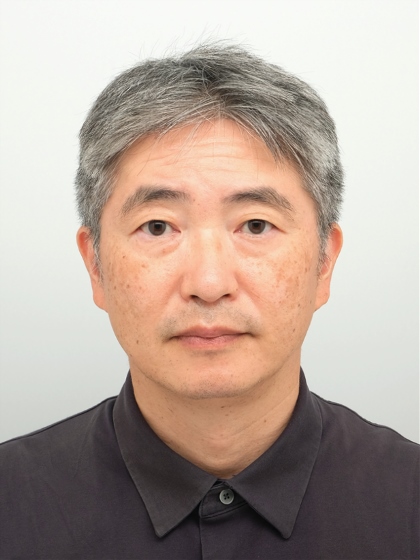
Gaku Shoji, Chair
17th Japan Earthquake Engineering Symposium Organizing Committee