


Keynote Address
[Keynote Address]
From Individual Behavior Change to Structural Policy Solutions in Addressing Societal Challenges
Speaker : Wilhelm Hofmann, Ph.D.
Department of Social and Environmental Psychology, Ruhr University, Germany
Major societal challenges—from climate change to obesity—are frequently framed as problems of individual behavior. Yet this emphasis often obscures the structural forces that determine which choices are available, accessible, affordable, and normative (Hofmann, 2023, NRP). This keynote advances a multilevel perspective that critically examines the interplay between individual agency and structural constraints. I begin by challenging psychology’s traditional emphasis on autonomy, arguing that understanding sustainable consumption and health behaviors requires acknowledging how institutions and social practices co-shape choice environments beyond individual control. This talk presents four research lines following from this perspective: First, I review evidence on structural influences on choice and psychological determinants of citizens’ support for structural policies. Second, I introduce the novel concept of structural awareness and its measurement—the extent to which citizens recognize how structures constrain their choices. Recent studies show that structural awareness shapes responsibility attributions and policy support in contested domains. Third, I address the connection between behavioral scientists and policymakers. Drawing on evidence that behavioral interventions often yield modest effects in everyday life, I propose reconceptualizing accumulated failures as diagnostic instruments revealing structural barriers and providing evidence-based justification for comprehensive policy measures (Hofmann et al., 2025, NHB). Finally, I present evidence on policymakers’ perceptions of public support. Surveys across government levels show a problematic underestimation of public support for structural measures, a misperception that may seriously constrain political feasibility towards meaningful structural change.
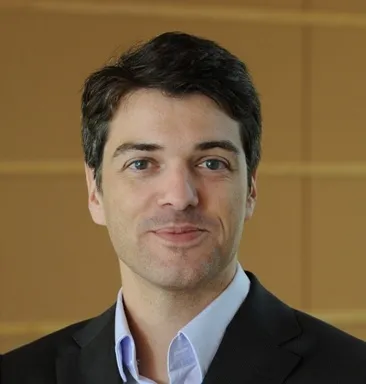
Short Bio Sketch:
Wilhelm Hofmann is the chair of the department of social and environmental psychology at Ruhr University Bochum in Germany, with prior academic positions at the Universities of Würzburg, Chicago and Cologne. His current main research interests are in the areas of self-control and self-regulation, environmental psychology, and public policy. Wilhelm Hofmann has co-authored more than 200 peer-reviewed journal articles and recently won the Mid-Career Award of the European Association of Social Psychology and is a member of the German National Academy of Sciences, Leopoldina.