


特別講演
[特別講演]
「集団(We)」における「個(I)」の力:共生社会を推進するための新たな心理学の展開
The Power of 'I' in 'We': A New Psychological Compass for Advancing Co-Prosperity
講演者:
チェ・フンソク (成均館大学校,大韓民国)
Hoon-Seok Choi, Ph.D. (Department of Psychology, Sungkyunkwan University (SKKU), South Korea)
*講演は英語で行われます。スクリーン上に自動翻訳の日本語字幕を映写します。
個人主義-集団主義という枠組みは,心理学や社会的行動における国際比較の基盤となってきた。比較文化心理学においてこの枠組みは主流であるが,国家を二元論的に分類する手法は,対象を静的かつ排他的なカテゴリーとして扱うという重大な難点を抱えている。より本質的な問題は,この二分法的視点が,心理的な「自律性」と「共同体志向」の間に働くダイナミックな相互作用を捉えきれていない点にある。
本講演では,個人の文化的志向に関する従来の二項対立を超越した心理学的枠組みである「集団主義的自律性(collectivistic independence)」(Choi, 2024, 2025; Choi et al., 2018, 2019; Choi & Euh, 2019; Choi & Lee, 2024)を紹介する。実験室およびフィールド調査の実証データに基づき,個人のエージェンシー(主体性)や強固な独自性は,それらを集団の福祉(welfare)と両立させた時に初めて,人々の幸福な繁栄(flourishing)を促すために不可欠な触媒として機能することを論じる。
具体的には,「集団主義的価値観」と「独立的自己概念」の統合が,個人の自律性への欲求と集団目標の優先という信念を両立させ,従業員のメンタルヘルスをいかに向上させるかを詳述する。あわせて,この新たな心理学的指針が集団間の偏見や差別を抑制し,より包摂的な社会環境を醸成することを示すデータも紹介する。
自己に対する見方においては独立性を保ちつつ,集団へ深くコミットすることを促すことで,本枠組みは共同体の成長に向けた重要な道筋を提示する。最終的には,「集団(We)」の中にある「個(I)」の調和こそが,ますます複雑化する世界において,個人と社会が共に繁栄(共生)するための根本的な原動力であると提言する。
The individualism-collectivism framework has long served as a cornerstone for understanding cross-national differences in psychology and social behavior. Despite its dominance in cross-cultural psychology, classifying nations into binary categories has faced significant challenges, as it often treats them as static, mutually exclusive categories. More critically, the binary view of individualism-collectivism fails to capture the dynamic interplay between psychological independence and communal orientation. In this talk, I will introduce the concept of collectivistic independence (Choi, 2024, 2025; Choi et al., 2018, 2019; Choi & Euh, 2019; Choi & Lee, 2024), a psychological framework that transcends the traditional dichotomy of individuals’ cultural orientation. Drawing on empirical evidence from both laboratory and field studies, I argue that individual agency and a strong sense of self-uniqueness serve as a vital catalyst for flourishing–provided they are integrated within the context of collective welfare. Specifically, I highlight how the combination of a collectivistic value orientation and an independent self-concept enhances employees' mental health by balancing the need for personal autonomy with beliefs in the primacy of collective goals. I also introduce data suggesting that this new psychological compass reduces intergroup prejudice and discrimination, fostering a more inclusive social environment. By encouraging individuals to maintain independence in self-views while remaining deeply committed to the group, this framework offers a critical pathway to communal growth. Ultimately, I propose that the harmony of the "I" within the "We" is a fundamental driver for the co-prosperity of individuals and society in an increasingly complex world.
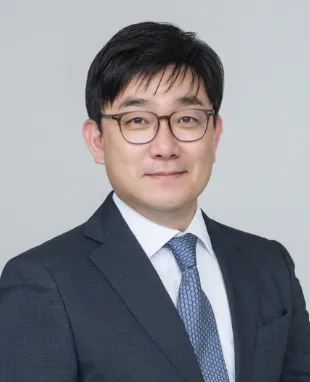
[講演者来歴]
チェ・フンソク(Hoon-Seok Choi):成均館大学校心理学科教授,同大学副学長。韓国心理学会(KPA)会長。120本以上の研究論文および10冊の著作を発表しており,文化的な隔たりを埋め,共生を推進するための心理学的指針の提示を目的とした研究に従事。韓国研究財団(NRF)人文社会科学卓越学者,韓国社会および性格心理学会(KSPPA)初代韓国社会心理学者賞,韓国心理学会特別研究賞など,国内の主要な学術賞を多数受賞。成均館大学校フェロー。
Hoon-Seok Choi is a Professor of Psychology and Executive Vice President at Sungkyunkwan University (SKKU) in Seoul, Korea. He also serves as President of the Korean Psychological Association (KPA). He has published over 120 research articles and 10 books with his colleagues. His academic contributions aim to bridge cultural divides and provide a psychological compass for advancing co-prosperity. He is the recipient of many prestigious awards in Korea, including the Humanities and Social Sciences Distinguished Scholar by the National Research Foundation of Korea, the Social Psychologist of Korea (inaugural) by the KSPPA, the Distinguished Research Award by the KPA, and the SKKU Fellowship.