


Exhibitors①
Katsujima Co., Ltd.
Katsujima Co., Ltd.
| Address | 125-0063 4-16-18 Shiratori, Katsushika-ku, Tokyo, JAPAN |
|---|---|
| TEL | 03-3603-7111 |
| FAX | 03-3603-7180 |
| Web site, SNS | https://www.katsujima.co.jp |
Bruker Japan
Bruker Japan
Contents
Contents
Download
Contents
①× ×, 2021(×)13:00~14:00
②× ×, 2021(×)13:00~14:00
Please click here to contact us (Zoom will start)
| Web site, SNS | https://www.bruker.com |
|---|
NV5 GEOSPATIAL SOLUTIONS K.K.
NV5 GEOSPATIAL SOLUTIONS K.K.

| Address | 113-0033 Nakayama Bldg 3F, 1-20-3, Hongo, Bunkyo-ku, Tokyo |
|---|---|
| TEL | 03-6801-6147 |
| Web site, SNS | https://www.nv5geospatialsoftware.com/ |
Paleo Labo Co., Ltd.
Paleo Labo Co., Ltd.

Paleo Labo conducts natural scientific analysis of artifacts and sediments excavated from the geo-archaeological sites. Besides boring core drilling facilities, we have been consistently performing 14C dating, plant macrofossil and microfossil analysis (pollen, phytolith, diatom), tephra, bone, Wood identification etc.
| Address | 335-0016 Livness More Todakouen 1F, 1-13-22, Shimomae, Toda-shi, Saitama-ken, 335-0016, Japan |
|---|---|
| TEL | 048-446-2345 |
| Web site, SNS | https://www.paleolabo.jp/English_site/e-toppage.html |
ISEE, Nagoya Univ.
ISEE, Nagoya Univ.

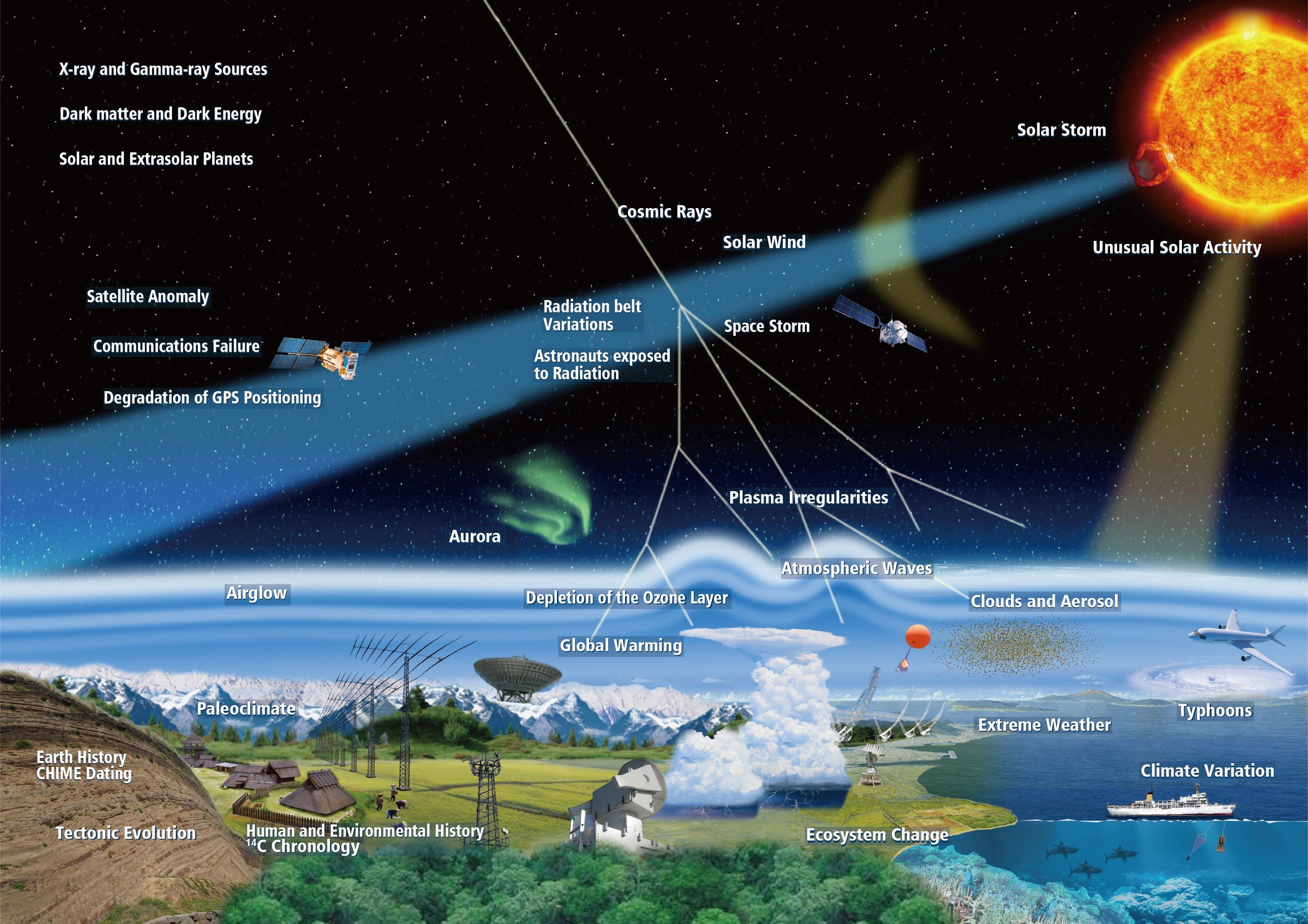
Our environment comprises various interacting elements and evolves with time. In particular, the dynamics of solar activity sometimes have a great influence on the global environment and human society. A huge solar flare explosion occurring on the solar surface severely disturbs the Earth's magnetic field, the atmosphere, and the radiation environment, and it may cause serious impacts on satellites, electric power, communications, aviation, and other infrastructure. Long-term variation in sunspot activity may also affect the global climate. Cosmic rays arriving from far away in the universe are also an element of our environment, and the cosmogenic isotopes in tree rings provide us with valuable information to explore past environments. On the other hand, it is important to understand the mechanisms of climate change and extreme weather phenomena, both of which may cause disasters. For this purpose, it is necessary to clarify not only the greenhouse effect but also the hydrological circulation, in which aerosols, clouds, and precipitation interact, as well as the interaction between meteorological dynamics and the land–ocean ecosystem with solar influence.
In order to explore the space–earth environment, interdisciplinary research across different fields is necessary. ISEE aims to play a role in promoting domestic and international research collaboration between researchers, and to develop a new discipline of space–earth environmental research. We look forward to your continued support and cooperation.
Education page at ISEE HP
Outreach page at ISEE HP


| Address | 464-8601 Furo-cho, Chikusa-ku, Nagoya, Aichi |
|---|---|
| Web site, SNS | https://www.isee.nagoya-u.ac.jp/en/ |
NETZSCH Japan K.K
NETZSCH Japan K.K

The Analyzing & Testing business unit of the NETZSCH Group develops and manufactures a complete high-precision instrument line for thermal analysis, rheology and fire testing, as well as offering world class commercial testing services in our laboratories. Our instrumentation is employed for research and quality control in the polymer sector, the chemical industry, the areas of inorganic and building materials, and environmental analysis. Instruments for controlling – such as for in-situ cure monitoring – complete our product line.
The standard of quality leadership.
Our innovative technological leadership and uncompromising quality standards make us one of the world’s leading manufacturers in our trade. We consistently incorporate outstanding developments – often originating in cooperation with our customers to ensure the utmost in user-pertinency – into our standard instrument series.
The highest level of technical competence.
First-rate software achievements that have been highly praised among experts, particularly in the area of evaluation (such as reaction kinetics or multicomponent analysis), attest to our high degree of technical progress and warrants the superiority of our products and services.
including manufacturing, sales, and support for research and industry.
We introduce high-end thermal analyzers, property testers, and rheometers
made by NETZSCH in Germany with world-class performance and quality.
Visit our booth for any thermal-related questions or challenges.
| Address | 221-0022 TVP Building, 3-9-13 Moriyacho, Kanagawa-ku, Yokohama-shi, Kanagawa |
|---|---|
| TEL | 045-453-1962 |
| Web site, SNS | https://analyzing-testing.netzsch.com/en |
Okayama University Institute for Planetary Materials
Okayama University Institute for Planetary Materials

For more information about the Institute and its faculty members, please refer to the Institute's webpage.
Organization and Research Activities
Division for Planetary Materials Experimental Physics
The aim of this division is to elucidate the structure and physical properties of terrestrial and planetary materials by experimental and computational methods, and to elucidate the internal structure, dynamics, and evolutionary processes of the Earth and planets. Our approaches include the development of ultrahigh-pressure generation techniques, large-volume high-pressure generation techniques, high-pressure and high-temperature in-situ physical property measurement methods, atomic-level structural analysis of materials, and first-principles calculations for physicochemical understanding.
Division of Planetary Materials Analytical Chemistry
Our objective is to understand the origin, evolution, and dynamics of the Earth and planets based on high-precision quantitative analysis, mass spectrometry, and spectroscopic analysis of terrestrial and extraterrestrial materials. To conduct these studies, we are developing comprehensive and advanced analytical methods and constructing a "Comprehensive Analysis System for Earth and Planetary Materials (CASTEM24remote)," which integrates different analytical instruments that can be operated remotely from outside the institute.
Division of Planetary Surface Environment Science
This division was established this year with the goal of exploring the evolution of Earth's and other planetary surface environments from historical to future perspectives. We examine a range of phenomena, from large-scale geological and geomorphological processes on planetary surfaces to water-rock interactions at the molecular level, utilizing simulation experiments in space chambers, remote sensing technologies and terrestrial analogues. Beyond fundamental research, we are committed to conducting studies that support global environmental preservation and practical research aimed at future human colonization of extraterrestrial planets.
Joint Usage / Research Center
The Institute for Planetary Materials (IPM) is recognized by the Ministry of Education, Culture, Sports, Science and Technology (MEXT) as a Joint Usage/Collaborative Research Center ("Planetary Materials Science Center" from FY2022) and provides domestic and international researchers and students with opportunities to use its experimental and research facilities and the associated technology and knowledge. The institute also promotes empirical materials science research using methods such as chemical analysis, dating, and structural analysis of materials. If you are interested, please refer to the following link. Applications are accepted once a year, but applications are also accepted at any time. After the coronal disaster, we can also conduct experiments and measurements on your behalf in some cases, so please contact us for more information.
Graduate school
The Planetary Material Science Course of the Earth Environment and Life Science Degree Program at Okayama University has been established for graduate student study at the Institute, and offers three educational programs: the Master's Course, the Doctoral Course, and the Blue Planets Special Course. Graduate students who enroll in the "Blue Planets Special Course" will receive consistent education with a standard completion period of five years. In the Blue Planets Special Course, graduate students from other research fields can receive a systematic education in planetary material science through a planned five-year curriculum. If the student is judged to have outstanding ability, he/she can obtain a doctoral degree in three years, which is the minimum time required to obtain a doctoral degree. We prepare a unique scholarship and research assistantship. With many researchers and students from abroad, students can concentrate on their research in an international environment.
Misasa International Student Intern Program(MISIP)
An internship program using the Institute's facilities is offered to 3rd and 4th year undergraduate students and master's students for six weeks every July and August. Students can participate in research projects under the guidance of our researchers using a variety of experimental and analytical equipment, and experience advanced research. Although we have already closed applications for this year, we plan to continue this program next year, so please consider applying if you are interested.
IPM News Letter (downloadable pdf)
IPM News Letter is available at the JpGU on-site booth. It can also be downloaded from the Institute's website.
Please visit the institute movie.
| Address | 682-0193 IPM, Okayama Univ., Yamada 827, Misasa, Tottori 682-0193, Japan |
|---|---|
| TEL | 0858-43-1215 |
| FAX | 0858-43-2184 |
| Web site, SNS | https://www.misasa.okayama-u.ac.jp/en/ |
SoftBank Corp./ALES Corp./Consortium to utilize the SoftBank original reference sites for Earth and Space Science
SoftBank Corp./ALES Corp./Consortium to utilize the SoftBank original reference sites for Earth and Space Science

ichimill is a service that enables advanced positioning with an error of a few centimeters by performing RTK positioning using signals received from GNSS such as the quasi-zenith satellite "Michibiki".
With general GNSS (GPS), the positioning error is around 5m to 10m, but SoftBank distributes "correction information" via the network. By performing RTK positioning calculations using the signals received by the GNSS receiver, real-time positioning with an error of several centimeters is possible.
By utilizing its own base station installation locations, SoftBank has installed its own reference sites (fixed stations) required for RTK positioning in more than 3,300 locations nationwide. No reference site preparation is required by the customer.
Because reference sites are deployed at a high density throughout the country, stable positioning can be achieved with very short switching times (handovers). Continuous high-precision positioning is possible even when traveling long distances, such as crossing reference sites.
https://www.softbank.jp/biz/services/analytics/ichimill/
Correction information generated by the "ALES distribution system" using observation data provided by SoftBank Corp. will be distributed to the customer's GNSS receiver via the Internet (Ntrip). By using this correction information, this service enables highly accurate positioning with an error of a few centimeters in real time.
https://ales-corp.co.jp/service/
■Post-processing data service (for corporate customers)
This is a service that provides corrected data generated based on observation data from unique reference sites provided by SoftBank Corp. in file format (RINEX) for post-processing. Highly accurate positioning is possible by performing post-processing using observation data acquired by the customer's GNSS receiver and this data.
https://ales-corp.co.jp/dataservice/
The center of our activities is the verification of data utilization methods in a wide range of earth science fields, such as earthquakes and meteorology, and is expected to greatly contribute to the prediction of natural disasters and disaster prevention and mitigation. SoftBank and ALES plan to make proposals for commercialization and disaster prevention/mitigation based on the research results. The consortium will also advance research in fields such as earthquakes, volcanoes, meteorology, and the ionosphere.
https://csess.jp/
Satellite Observation Center, NIES
Satellite Observation Center, NIES
Contents
Contents
Download
Contents
①× ×, 2021(×)13:00~14:00
②× ×, 2021(×)13:00~14:00
Please click here to contact us (Zoom will start)
Research Institute for Humanity and Nature (RIHN)
Research Institute for Humanity and Nature (RIHN)
The Research Institute for Humanity and Nature (RIHN) promotes "Human and Environmental Studies" as a form of comprehensive knowledge, including interdisciplinary research that combines the humanities, social sciences, and natural sciences, as well as a transdisciplinary approach that aims to solve problems in collaboration with society.
At JpGU 2025, RIHN will have an on-site booth in the General Exhibition area. The booth will feature posters introducing RIHN’s research, as well as books and other publications showcasing our latest research outcomes.
| Address | 603-8047 457-4 Motoyama, Kamigamo, Kita-ku, Kyoto, 603-8047 JAPAN |
|---|---|
| TEL | 075-707-2482 |
| Web site, SNS | https://www.chikyu.ac.jp/rihn_e/ |
Newtech Co.,Ltd.
Newtech Co.,Ltd.
Contents
Contents
Download
Contents
①× ×, 2021(×)13:00~14:00
②× ×, 2021(×)13:00~14:00
Please click here to contact us (Zoom will start)
Seiko Epson Corporation
Seiko Epson Corporation

Seiko Epson Corporation develops and sells a low-noise compact 3-axis accelerometer that can be used for seismic observation, constant micro-motion measurement, and infrastructure aging monitoring.
At the booth exhibition, we will display new products as a reference!


● Provides high-precision data for seismic observation and infrastructure monitoring. Enables early anomaly detection and rapid response!
● Epson's proprietary technology achieves low noise performance, high bias stability, and wide dynamic range!
● Digital output is possible with low power. Build a measurement system simply!
Data Sheet Booth Exhibits

If you have any questions about our products or if you would like to evaluate our samples, please feel free to contact us.
Click here for inquiries
You can also download materials that show the types of sensors, an overview of their uses, and a lineup. Comparison results with conventional seismographs and displacement analysis results of railway bridges are introduced.
Download the documents
◆CM video: Why Epson? Social Infrastructure Conservation Micro Devices (Japanese)

◆LOGICAL PRODUCT: 高精度3軸ワイヤレス加速度センサ (Japanese)
◆Sonas, Inc.: 構造物モニタリング向け加速度センサユニット (Japanese)
◆Knowledge Foresight Inc.: ゆれMON Special、HYPER (Japanese)
◆Netplus株式会社: 高精度三軸加速度計 (Japanese)
※Click here for other product information (Japanese)
| Web site, SNS | https://global.epson.com/products_and_drivers/sensing_system/ |
|---|
Tokyo Geographical Society
Tokyo Geographical Society
Although we have no regular meetings for presenting research papers as usual academic societies, we have continued to carry out a wide range of activities as below:
1. Enhancing public awareness on geosciences
1) Scientific lectures, excursion and geotours
2) Collecting books and literature related to geosciences and compiling the history of geosciences
3) Introduction of geo-experts among the society members to the public as lecturers, committee members, geotour guides, etc.
4) Cooperation and contact with related academic societies
5) Publicity activities through website
2. Publishing and distribution of geoscience journals and publications
1) Editing and publishing the official journal: Journal of Geography (Chigaku Zasshi)
2) Distribution and selling publications of the society
3. Grant and award programs for researches and outreach activities
1) Grants for geoscience researches, international geoscience meetings, and outreach activities and publications
2) Awards for individuals and groups within Japan and abroad, who are significantly contributing to the development and dissemination of geoscience.
TGS Website
Poster on “Foundation of TGS” at Exhibition Hall (A13)
Special issues on themes of particular interest to geoscientists, focus mainly on the Japanese archipelago and the Asian region as a whole. Distinguished geoscientists engaged in a wide range of fields provide valuable review papers summarizing the frontiers of their research. Published in color, examples of recent issues are shown below:
Journal Archive
Sample copies at Exhibition Hall (A13)
Geoscience Club is a few times a year lecture event designed to promote the geosciences, as well as to serve a social function for members and guests. Geoscientists engaged in first-rate research are invited to present state-of-the-art research results in a relaxed, salon-like atmosphere at the auditorium of the Chigaku Kaikan (in central Tokyo).
Information and reports on the geotours and field trips are posted on TGS website (Geotours) and in Journal of Geography.
In 2025, map lectures and geotours will be held for 8/7, 10/19, and 11/16.
Information flyers at Exhibition Hall (A13)
1) Grants for geoscience surveys and research for up to 10 projects a year, a maximum of ¥500,000 per project
2) Grants for holding international research geoscience meetings in Japan, for one to three projects a year, up to ¥1,000,000 per project
3) Grants for publication activities to promote an understanding of various geoscience phenomena in general and to raise awareness of the geosciences in areas related to geoparks and natural heritage sites in Japan, for one to two projects a year, a maximum of ¥1,000,000 per project
4) Grants for outreach activities to promote an understanding of various geoscience and geography club in high schools, for one to two projects a year, a maximum of ¥150,000 per project
5) Grants for outreach activities to promote an understanding of various geoscience and geography education in high schools, for one to two projects a year, a maximum of ¥200,000 per project since 2024
6) Emergency Research and Survey Grants 2024 and 2025 for Noto Peninsula Earthquake of 2024 and subsequent disasters, and their reconstruction assistance for a few projects a year, a maximum of ¥1,000,000 per project
Guidelines are posted on TGS website (Grants and Awards) before the application period every year, and a list of grants awarded is also available.
Information flyers at Exhibition Hall (A13)
A list of award recipients is available on TGS website (Grant and Award)
For details on membership, please consult our website (Membership).
Leaflets and membership application at Exhibition Hall (A13)
| TEL | 03-3261-0809 |
|---|---|
| FAX | 03-3263-0257 |
| Web site, SNS | https://www.geog.or.jp/english/ |
Hakusan Corporation
Hakusan Corporation
| Address | 183-0023 KDX Fuchu Building 8F,1-40,Miyamachi,Fuchu-shi,Tokyo |
|---|---|
| TEL | 042-333-0080 |
| FAX | 042-333-0096 |
| Web site, SNS | https://www.hakusan.co.jp/english/ |
MEIJI TECHNO CO.,LTD.
MEIJI TECHNO CO.,LTD.
Contents
Contents
Download
Contents
①× ×, 2021(×)13:00~14:00
②× ×, 2021(×)13:00~14:00
Please click here to contact us (Zoom will start)
| Web site, SNS | https://www.meijitechno.com/ |
|---|
Earth, Planets and Space
Earth, Planets and Space

publishing with Springer-Nature
Impact Factor (2023): 3.0
5-year IF (2023): 2.9
CiteScore: 5.8
H Index: 91
Rapid peer review and publication
14 days submission to first editorial decision for all manuscripts (Median)
162 days submission to accept (Median)
[in 2023]
Article Type
Full Paper without word limit.
Express Letter has a limit of 5000 words including the main text, figure legends and table legends. The sum of the number of figures and tables should be less than or equal to 5.
Frontier Letter can be submitted upon invitation by the Editor-in-Chief.
Technical Report describes the technical development of instrument or software.
Comment is a substantial re-analysis of a previously published article in the journal.
“Express Letter”
Express Letters provide you with a fast turnaround time, while maintaining rigorous peer review.
From submission to first decision, the shortest time is 19 days, and the average is 45 days (based on 2023 data).
"Technical Report"
Technical Reports present a software tool or an experimental or computational method, test or procedure, or hardware design.
Special Issues
We welcome proposals for special issues.
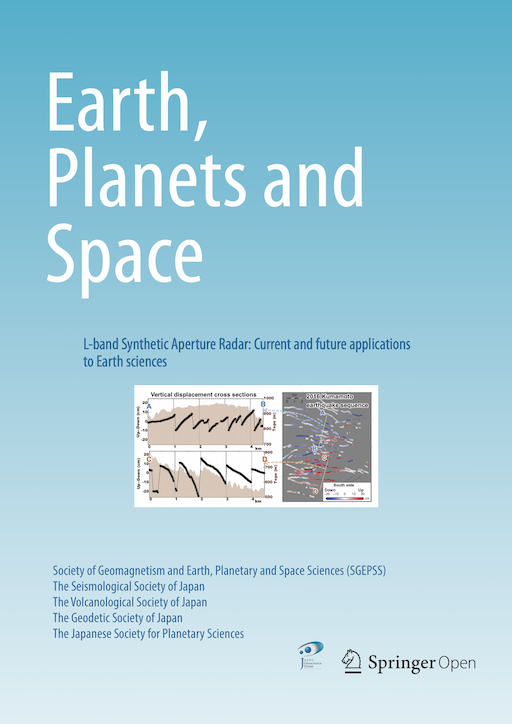
Submit your paper to journal EPS
Article Processing Charge
Full Paper/Technical Report $1,640
Express Letter $1,184.9
Members* of the societies co-publishing EPS will obtain discounts.
https://www.earth-planets-space.org/en/submit-manuscript
(*) The APC for members is applicable when a corresponding author belongs to any of the five societies that co-publish EPS.
Editor in Chief
Masahito Nosé
Nagoya City University, Japan
Vice Editors-in-Chief
Takahiro Ohkura Tatsuhiko Saito Hidenori Genda
Advisory Board
Editorial Board

| Address | 650-0034 3F Sannomiya Century Bldg., 83, Kyomachi, Chuo-ku, Kobe, Hyogo |
|---|---|
| TEL | 078-332-3703 |
| Web site, SNS | https://www.earth-planets-space.org/en/ |