


Exhibitors③
Tohoku University & JAMSTEC Advanced Institute for Marine Ecosystem Change (WPI-AIMEC)
Tohoku University & JAMSTEC Advanced Institute for Marine Ecosystem Change (WPI-AIMEC)
Contents
Contents
Download
Contents
①× ×, 2021(×)13:00~14:00
②× ×, 2021(×)13:00~14:00
Please click here to contact us (Zoom will start)
Asia Air Survey co., ltd.
Asia Air Survey co., ltd.
Contents
Contents
Download
Contents
①× ×, 2021(×)13:00~14:00
②× ×, 2021(×)13:00~14:00
Please click here to contact us (Zoom will start)
oyo corporation
oyo corporation

Contents
Contents
Download
Contents
①× ×, 2021(×)13:00~14:00
②× ×, 2021(×)13:00~14:00
Please click here to contact us (Zoom will start)
| Address | 101-8486 Sumitomo Fudosan Kanda Building 9th Floor, 7 Kanda Mitoshiro-cho, Chiyoda-ku, Tokyo, 101-8486, Japan |
|---|---|
| TEL | 03-5577-4501 |
| FAX | 03-5577-4567 |
| Web site, SNS | https://www.oyo.co.jp/english/ |
JDRONE
JDRONE
Contents
Contents
Download
Contents
①× ×, 2021(×)13:00~14:00
②× ×, 2021(×)13:00~14:00
Please click here to contact us (Zoom will start)
Science of Slow-to-Fast Earthquakes
Science of Slow-to-Fast Earthquakes

The recently discovered phenomenon of slow earthquakes has attracted scientific attention because it may fundamentally change our understanding of earthquakes. During an earthquake, underground rock ruptures quickly, radiating strong seismic waves that shake the ground. During slow earthquakes, the underground rock also ruptures, but slowly, so the shaking is very weak, sufficiently weak that these earthquakes have been overlooked until this century, with the development of highly sensitive instrumentation for seismic detection. Research during the last two decades has discovered slow earthquakes in various regions worldwide and has established some of their characteristics. However, their relationship to the occurrence of huge earthquakes, a topic of paramount concern, is not well understood. Therefore, we have launched a research project to broaden and deepen our understanding of earthquakes ranging from slow earthquakes to fast (ordinary) earthquakes. This is a Grant-in-Aid for Scientific Research Project [Grant-in-Aid for Transformative Research Areas (A)] of MEXT, Japan, entitled “The Science of Slow-to-Fast Earthquakes”.
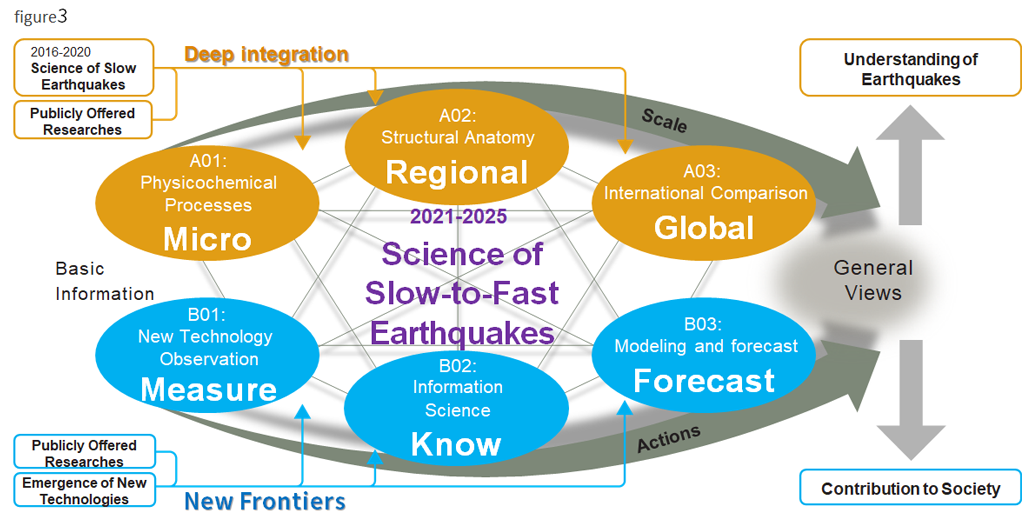
To enable these researchers from various fields to collaborate effectively, six planned research subgroups have been established in the research area (see below schematic figure). These are the A01 Physicochemical Processes Group, A02 Structural Anatomy Group, A03 International Comparison Group, B01 New Technology Observation Group, B02 Information Science Group, and B03 Modeling and Forecast Group. In addition, we are calling for publicly offered research proposals every two years. Approximately 100 researchers, and many students who will lead the next generation of scientists, will work within this five-year-long research project to understand both slow and fast earthquakes and better forecast their future occurrence.
Date: 2024/5/24~26
Venue: Kochi-City Culture Plaza CUL-PORT (Kochi-shi, Kochi prefecture)
Website: link

Reports of the 2024 workshop is here
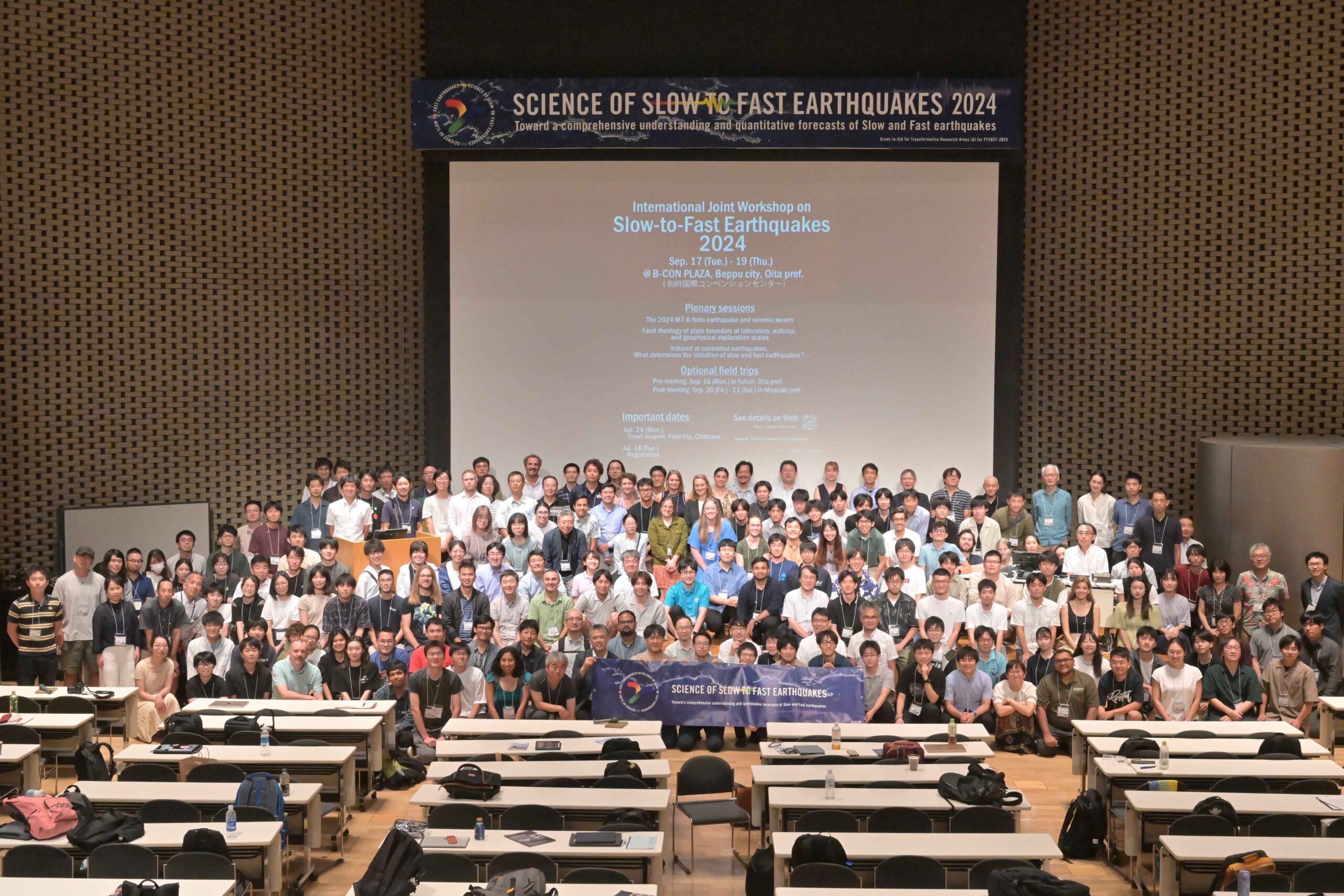
Group photo in the 2024 workshop
Session information
We have a three-day oral session and 51 posters in JpGU 2025.
Oral Session
5/26 Mon. PM1, PM2
5/27 Tue. AM1, AM2, PM1, PM2
5/28 Wed. AM1, AM2, PM1
Poster session
5/28 Wed. PM3
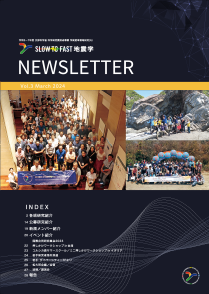
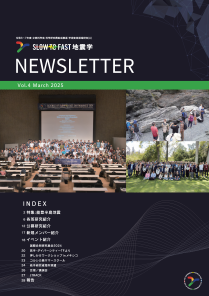
Published newsletters and leaflets on our website
JAPEX
JAPEX

| Address | 100-0005 Sapia Tower 1-7-12, Marunouchi, Chiyoda-ku, Tokyo 100-0005, Japan |
|---|---|
| TEL | 03-6268-7130 |
| FAX | 03-6268-7303 |
| Web site, SNS | https://www.japex.co.jp/en/ |
JGI,inc.
JGI,inc.
Contents
Contents
Download
Contents
①× ×, 2021(×)13:00~14:00
②× ×, 2021(×)13:00~14:00
Please click here to contact us (Zoom will start)
| Web site, SNS | https://jgi-inc.com/english/ |
|---|
Earth-Life Science Institute (WPI-ELSI)
Earth-Life Science Institute (WPI-ELSI)

Earth-Life Science Institute — Search for the Origin of Earth and Life
The Earth-Life Science Institute (ELSI) of Institute of Science Tokyo, established in 2012, is a member of research centers of the World Premier International Research Center Initiative (WPI) Programme of the Ministry of Education, Culture, Sports, Science, and Technology (MEXT). ELSI’s mission is to discover the “origins of the Earth and life” through an integrated interdisciplinary approach that brings together top-level domestic and international researchers in fields such as Earth science, life science, and planetary science. ELSI investigates questions such as how Earth formed in the solar system, how life originated on Earth, and how life and the Earth arrived at their present forms. Furthermore, ELSI also considers how life might exist in other planetary systems based on this understanding of how Earth and life on Earth originated.
-Department of Earth and Planetary Sciences (EPS)
-Department of Life Science and Technology (LST)
-Department of Chemical Science and Engineering (CSE)
For more information please visit ELSI Graduate Course website.
Introduction to ELSI by WPI
ELSI Graduate Course (Earth Life Course)
| Address | 152-8550 2-12-1-, Ookayama, Meguro-ku, Tokyo, JAPAN |
|---|---|
| TEL | 03-5734-3163 |
| Web site, SNS | https://www.elsi.jp/en/ |
National Astronomical Observatory of Japan, TMT Project/ALMA Project
National Astronomical Observatory of Japan, TMT Project/ALMA Project
Thirty Meter Telescope
ALMA is one of the world's largest radio telescopes located in Chile, consisting of 66 antennas.
Constructed and operated with international cooperation led
on behalf of Europe by ESO,
on behalf of North America by NRAO,
on behalf of East Asia by NAOJ.
2023 marks the 10th anniversary of its inauguration!
Radio wave observations with ALMA allow us to observe dust and gas which are the material of planets.
ALMA can observe them with unprecedented high angular resolution and high sensitivity.
TMT is an ambitious project with plans to construct on Hawai`i an extremely large telescope with an aperture of 30m with the cooperation of five countries including Japan. The major goals of TMT include search for signatures of life on extrasolar planets and the history of our solar system.
◆TMT Overview
・Aperture:30 meters / 492 segment mirrors
・Wavelength range:0.31-28μm
・Diffraction limit:8miliarcsec (at 1μm)
・Sensitivity:More than 100 times better than conventional telescopes
(when observing a point light source with adaptive optics)
Brochure
In Search for Life on Extrasolar Planets
Our Solar System
Science Teams
Maunakea and TMT
Many planetary systems around stars other than our Sun are being discovered today, and we are learning that there exist planets with various sizes and orbits. Recently, planets similar in size as Earth have been discovered, indicating that there are planetary systems much like our own Solar Sytem. Today, infrared observation has advanced to a point of being able to actually capture images of these planets.
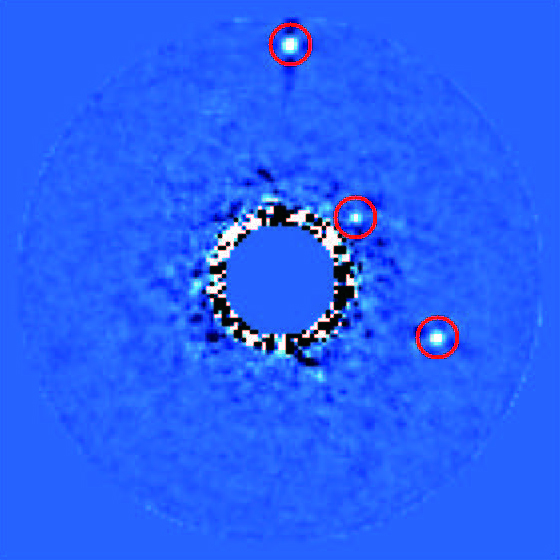
Three Jupiter-like planets around HR8799 discovered by the Subaru Telescope (in red circle). TMT will attempt to directly capture even smaller Earth-like planets. (Credit: CHARIS Team of Princeton University, and NAOJ)
◆Are we alone?
Are there extrasolar planets with existence of life? This is a question common to all humanity. TMT aims to discover signs of life on these planets.
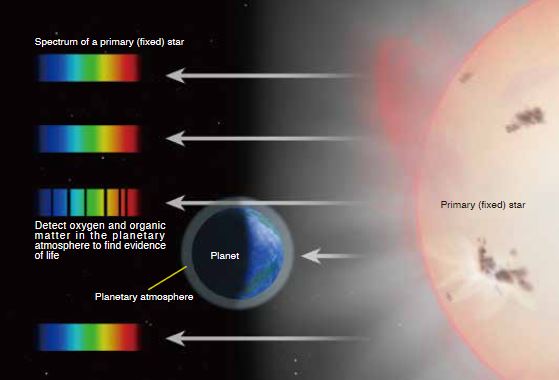
TMT will be able to study the composition of the atmosphere of extrasolar planets through spectroscopic observation. Discovery of oxygen molecules and organic substances could be a signature of existence of extra-terrestrial life.
Exoplanets with TMT (TIO website)
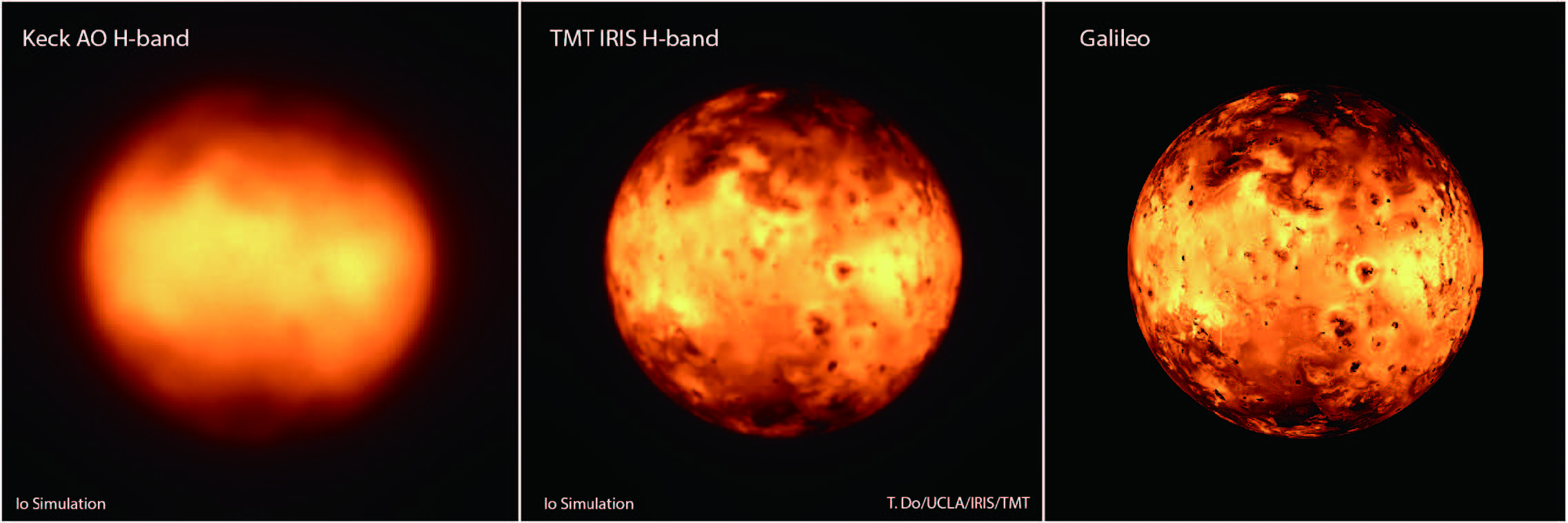
The view of Jupiter's moon Io when observed using adaptive optics. The image on the left is a simulation of a conventional telescope with an aperture of 8 to 10 meters, and the image in the center is a simulation of TMT. The image on the right is the actual image taken by the Galileo spacecraft (Credit: T. Do/UCLA/IRIS)
Our Solar System with TMT (TIO website)
ISDTs (TIO website)
| Address | 181-8588 東京都三鷹市大沢2-21-1 |
|---|---|
| Web site, SNS | https://www.nao.ac.jp/en/ |
National Research Institute for Earth Science and Disaster Resilience
National Research Institute for Earth Science and Disaster Resilience


| Address | 305-0006 3-1 Tennodai, Tsukuba, Ibaraki 305-0006, JAPAN |
|---|---|
| TEL | 029-851-1611 |
| FAX | 029-851-3246 |
| Web site, SNS | https://www.bosai.go.jp/e/ |
Nuclear Waste Management Organization of Japan
Nuclear Waste Management Organization of Japan
| Address | 108-0014 東京都港区芝4-1-23三田NNビル2階 |
|---|---|
| TEL | 03-6371-4003 |
| FAX | 03-6371-4102 |
| Web site, SNS | https://www.numo.or.jp/en/ |
SUSTEC
SUSTEC
Contents
Contents
Download
Contents
①× ×, 2021(×)13:00~14:00
②× ×, 2021(×)13:00~14:00
Please click here to contact us (Zoom will start)
| Address | 223-0051 2-11-19, Minowa-cho, Kohoku-ku, Yokohama |
|---|---|
| TEL | 045-560-1350 |
| FAX | 045-560-1351 |
| Web site, SNS | https://sustec.jp/index-e.html |
GeoTechnologies, Inc.
GeoTechnologies, Inc.
| Address | 113-0021 2-28-8 Honkomagome,Bunkyo-ku,Tokyo |
|---|---|
| Web site, SNS | https://english.geot.jp/?_gl=1%2Adc832i%2A_gcl_au%2AMTkzNTUyMTI1NC4xNzQwNjM4MjMw%2A_ga%2ANjM4NjEwOTQyLjE2ODA1NzU3MjQ.%2A_ga_Z8NSCZT9BC%2AczE3NDc2MDgxNTkkbzQwJGcwJHQxNzQ3NjA4MTU5JGowJGwwJGgw |
Geosys, Inc.
Geosys, Inc.

We handle a wide range of geophysical exploration-related services,
including the sales of geophysical exploration systems and software,
contract surveys and survey support, measurement services, and technical support for hardware and software related to geophysical exploration.
Exhibit Overview
We are showcasing the following cutting-edge technologies:
- "iDAS" by Silixa Ltd.
- A market-leading distributed acoustic sensing (DAS) system utilizing fiber optic cables for high-resolution, real-time monitoring.
- A high-sensitivity seismometer designed for precise ground motion detection, continuing the trusted legacy of REFTEK.
- A compact, all-in-one solution combining a high-performance seismic recorder and a broadband 3-component seismometer.
It accurately captures amplitude, frequency, and phase, supporting a wide range of advanced applications, including geothermal and mining exploration, environmental and geoscience studies, infrastructure monitoring, and natural gas and oil development, among others.
iDAS-MG Download
ULTIMA DTS Download
XT-DTS Download
Carina Sensing Download
Compact, high performance one-component 1Hz seismometer
The LE-1D/V is the little brother of the LE-3Dlite and perfectly suited to density seismic networks, to install seismic small arrays, and for engineering purposes. The LE-1D/V made for fieldwork in harsh environments.
LE-3Dlite MkIII
Compact, high performance three-component 1Hz seismometer
The Le-3Dlite is perfectly suited for all kinds of local (micro)seismic monitoring- no matter if you want to measure tectonic, volcanic or induced seismicity. The seismometer is made for fieldwork in harsh environments.
ReftekDownloadIGU-BD3C-5 is manufactured by SmartSolo (Canada) and excels in collecting seismic data in relatively low-frequency bands. It is especially suited for natural seismic monitoring, ambient noise surveys, and long-term, independent, and distributed observation targeting slow ground motions or tectonic plate movements.
We also offer various customization options to support extended observation needs.
Demo and spare units are available — please feel free to contact us for more information.
IGU-BD3C-5Download
| Address | 112-0012 1-5-18, Otsuka, Bunkyo-ku, Tokyo 112-0012, JAPAN |
|---|---|
| TEL | 03-5940-5952 |
| Web site, SNS | https://www.geosys.co.jp/ |
NRA JAPAN Division of Research for Earthquake and Tsunami
NRA JAPAN Division of Research for Earthquake and Tsunami

Quiz Rally Questioner
NRA JAPAN aims to continuously improve safety regulations to implement reliable nuclear regulations to protect people and the environment.
Division of Research for Earthquake and Tsunami conducts safety research on external events (natural disasters such as earthquakes and tsunamis) that cannot be artificially controlled, and on the structural integrity of nuclear facilities such as buildings and equipment that are affected by such events.
The following are some examples of our research in the field of natural hazards.
Position of the Division of Research for Earthquake and Tsunami in NRA JAPAN

Section 1

Section 2

Section 3

Section 4

At the local site, we are conducting a “microfossil search” and a “tephra quiz” using a stereo microscope. Please visit us at the local booth.
NRA JAPAN pamphlet (in Japanese)
Download
Research Division pamphlet (in Japanese)
Download
Video: Introduction of the organization from newly hired staff (in Japanese)
Video: Introduction of the organization from a mid-career staff member (in Japanese)
Video: Introduction of the organization from research staff (in Japanese)
Employment Opportunities at the NRA JAPAN is here (in Japanese)
| Address | 106-8450 Roppongi First Bldg 15F, 1-9-9 Roppongi, Minato-ku, Tokyo, JAPAN |
|---|---|
| TEL | 03-5114-2226 |
| FAX | 03-5114-2236 |
| Web site, SNS | https://www.nra.go.jp/activity/anzen/bunya/hazard_index.html |
JAXA Earth Observation Research Center
JAXA Earth Observation Research Center
JAXA Earth Observation Research Center (EORC) conducts calibration & validation of satellite data, and the Earth science research and application research using these data.
EORC conducts research in the field of Earth science such as global climate change, water cycle, atmospheric environment and crustal movements, using satellite data while developing calibration & validation and analysis methods to improve data accuracy of sensors onboard Earth observation satellites.
Earth-graphy (All about JAXA's Earth Observations)
 Satellite Navigator
 Follow our SNS! Get the latest information. (Japanese only)

X
JAXA Satellite Navigator
YouTube
JAXA Satnavi Channel

LINE Stickers
JAXA Earth Observing Satellite Stickers
JAXA Earth API allows you to easily access satellite data in Python or JavaScript code. Please see the website below for details.
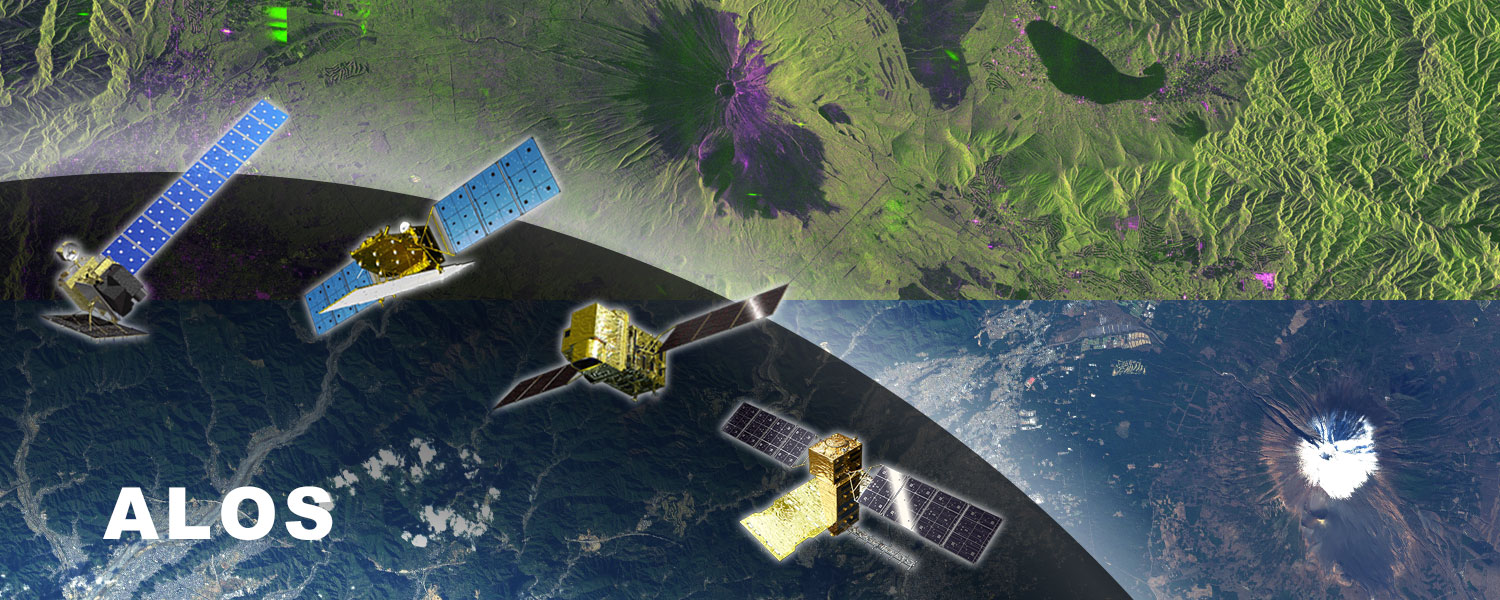 ALOS Research and Application Project conducts the Earth science / application research using Synthetic Aperture Radar (SAR) and high-resolution optical sensors onboard the "DAICHI" (ALOS) series satellites. ALOS Research and Application Project
 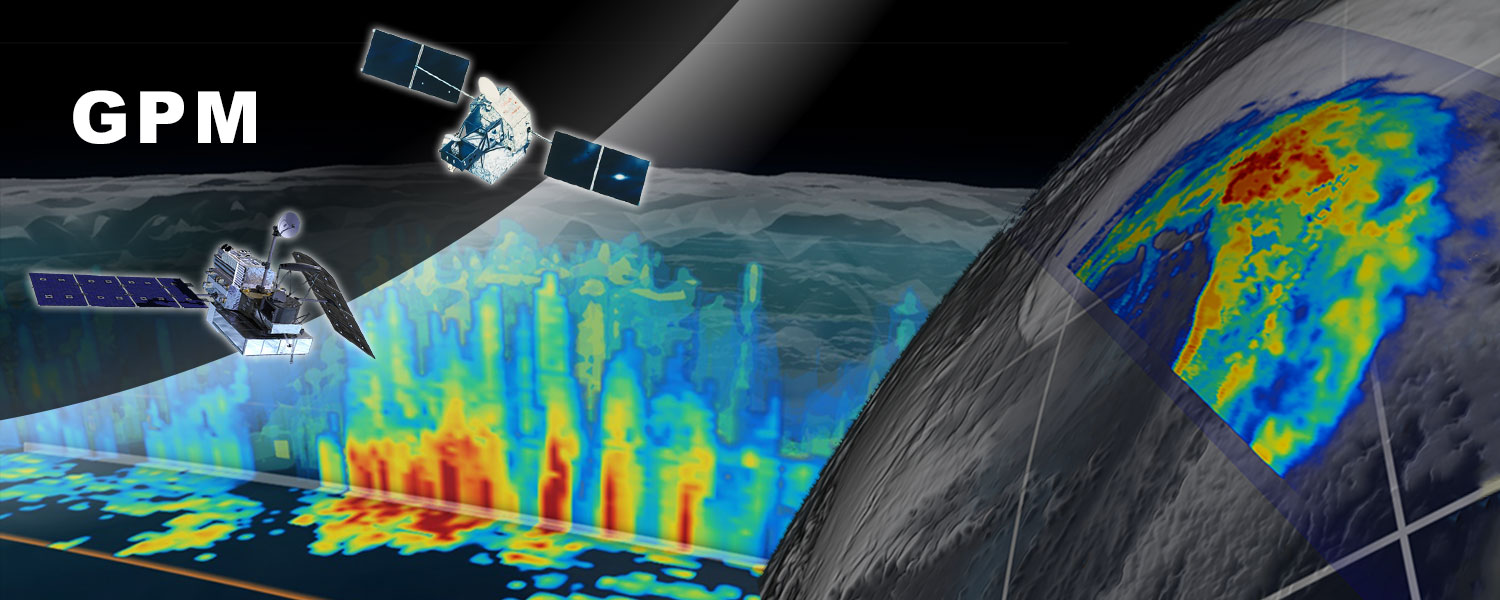 GPM project conducts the Earth science / application research and calibration & validation in the field of precipitation and water cycle using the precipitation radar onboard earth observation satellites. The precipitation radar enables observation of three-dimensional structure of rain and snow. GPM Project
 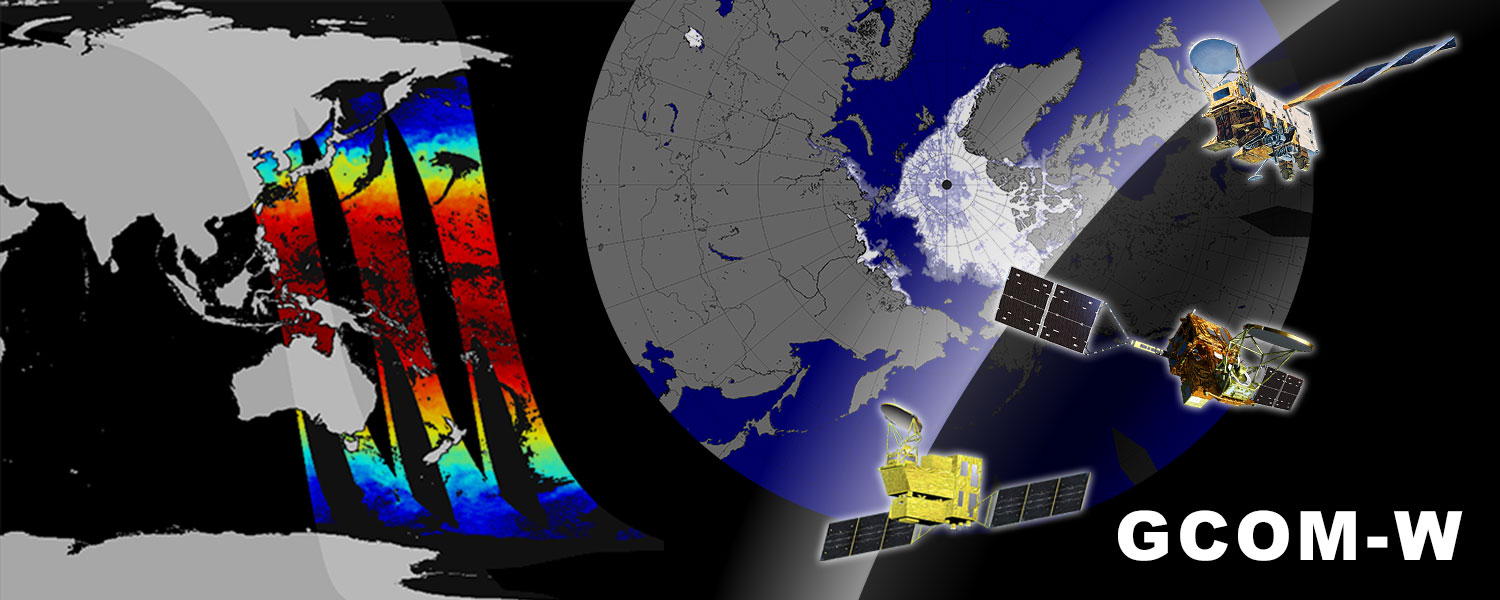 GCOM-W project conducts the Earth science / application research and calibration & validation activities related to climate and water cycle variations using the Advanced Microwave Scanning Radiometer (AMSR) series. GCOM-W Project AMSR Series
 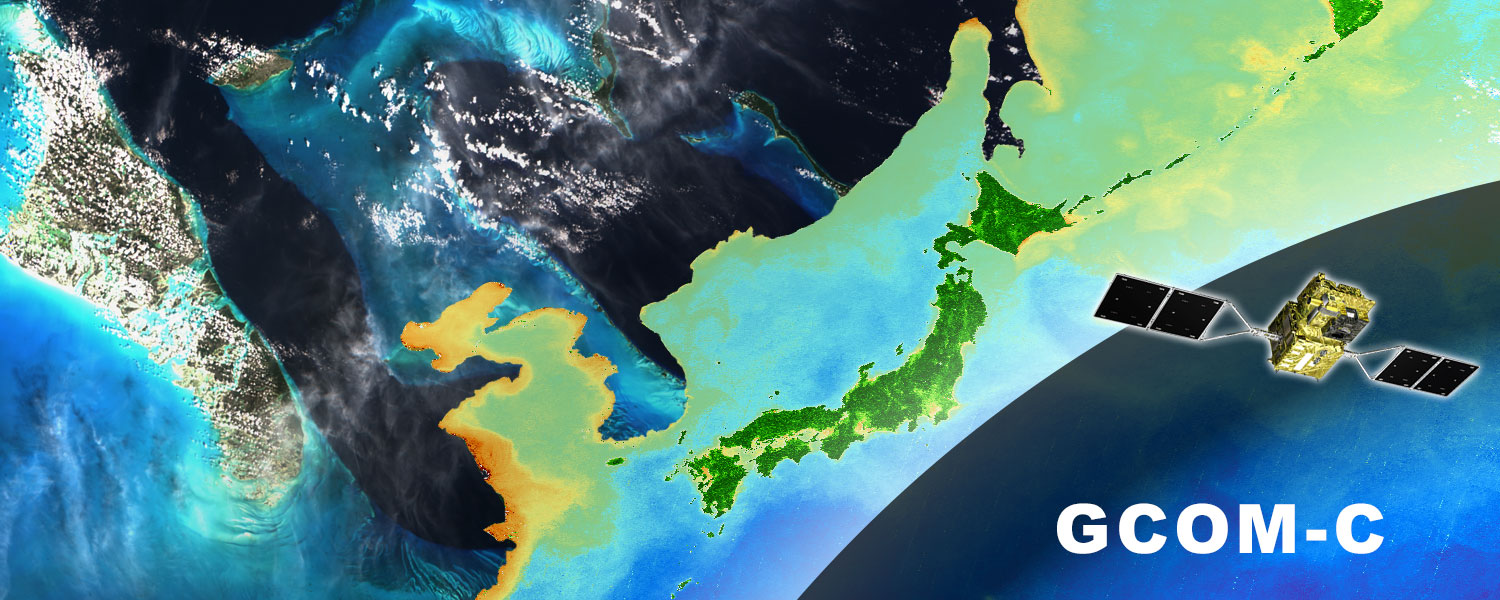 GCOM-C project conducts the Earth science / application research and calibration & validation related to climate change using the Second generation GLobal Imager (SGLI) onboard Earth observation satellite "SHIKISAI" (GCOM-C). GCOM-C Project
  GOSAT project conducts research and development and data calibration & validation by using sensors onboard the "IBUKI" (GOSAT) series satellites for observing greenhouse gases (carbon dioxide, methane) which are the causes of global warming. GOSAT Project
  EarthCARE is an Earth observation satellite mission developed jointly by Japan and Europe. It is expected that the mission will improve the numerical climate model and contribute to improving the accuracy of climate change prediction. EarthCARE Project JAXA Employment Opportunities (English site)
| Address | 305-8505 2-1-1 Sengen, Tsukuba-shi, Ibaraki, JAPAN |
|---|---|
| Web site, SNS | https://earth.jaxa.jp/ |