


Exhibitors
Finapp S.p.A.
Finapp S.p.A.

◆① By harvesting the power of cosmic rays, Finapp has revolutionized soil moisture and snow water equivalent monitoring across all the sectors where water data is critical with a ground breaking technology.
◆② About Finapp
Finapp born in 2019 as a university spin off, pioneers cosmic rays technology to measure water in soil and snow.
Our patented CRNS probes (Cosmic Rays Neutron Sensing) deliver insights for smart agriculture, water leaks pre detection environmental monitoring and snow water equivalent.
Recognized by European Innovation Council and (FAO).
Finapp born in 2019 as a university spin off, pioneers cosmic rays technology to measure water in soil and snow.
Our patented CRNS probes (Cosmic Rays Neutron Sensing) deliver insights for smart agriculture, water leaks pre detection environmental monitoring and snow water equivalent.
Recognized by European Innovation Council and (FAO).
Contents
Download
◆③ How does it work? Cosmic rays from outer space collide with earth’s atmosphere, creating fast neutrons, these neutrons interact with hydrogen in soil and snow, slowing down and becoming slow neutrons.
Our patented CRNS probe counts both fast and slow neutrons, and the difference between both measurements tell us the water content:
• In-depth: Fast neutrons travel up to 50 cm deep into the soil due to their high energy.
• On a large scale: Slow neutrons scatter over a hemispherical area with a radius of ~ 150 – 300 meters.
Our patented CRNS probe counts both fast and slow neutrons, and the difference between both measurements tell us the water content:
• In-depth: Fast neutrons travel up to 50 cm deep into the soil due to their high energy.
• On a large scale: Slow neutrons scatter over a hemispherical area with a radius of ~ 150 – 300 meters.
◆④ Finapp has successfully installed probes in: 7 Continents across 25 countries.
1,7 Billion water saved
1300 ton CO2 less emitions
1,7 Billion water saved
1300 ton CO2 less emitions
| Address | 35036 via del commercio 27, Padova, Italy |
|---|---|
| TEL | +393515752197 |
| Web site, SNS | http://www.finapptech.com/en |
INPEX CORPORATION
INPEX CORPORATION
◆①
Contents
◆②
Contents
Download
◆③
Contents
◆④
①× ×, 2021(×)13:00~14:00
②× ×, 2021(×)13:00~14:00
Please click here to contact us (Zoom will start)
ISEE, Nagoya University
ISEE, Nagoya University

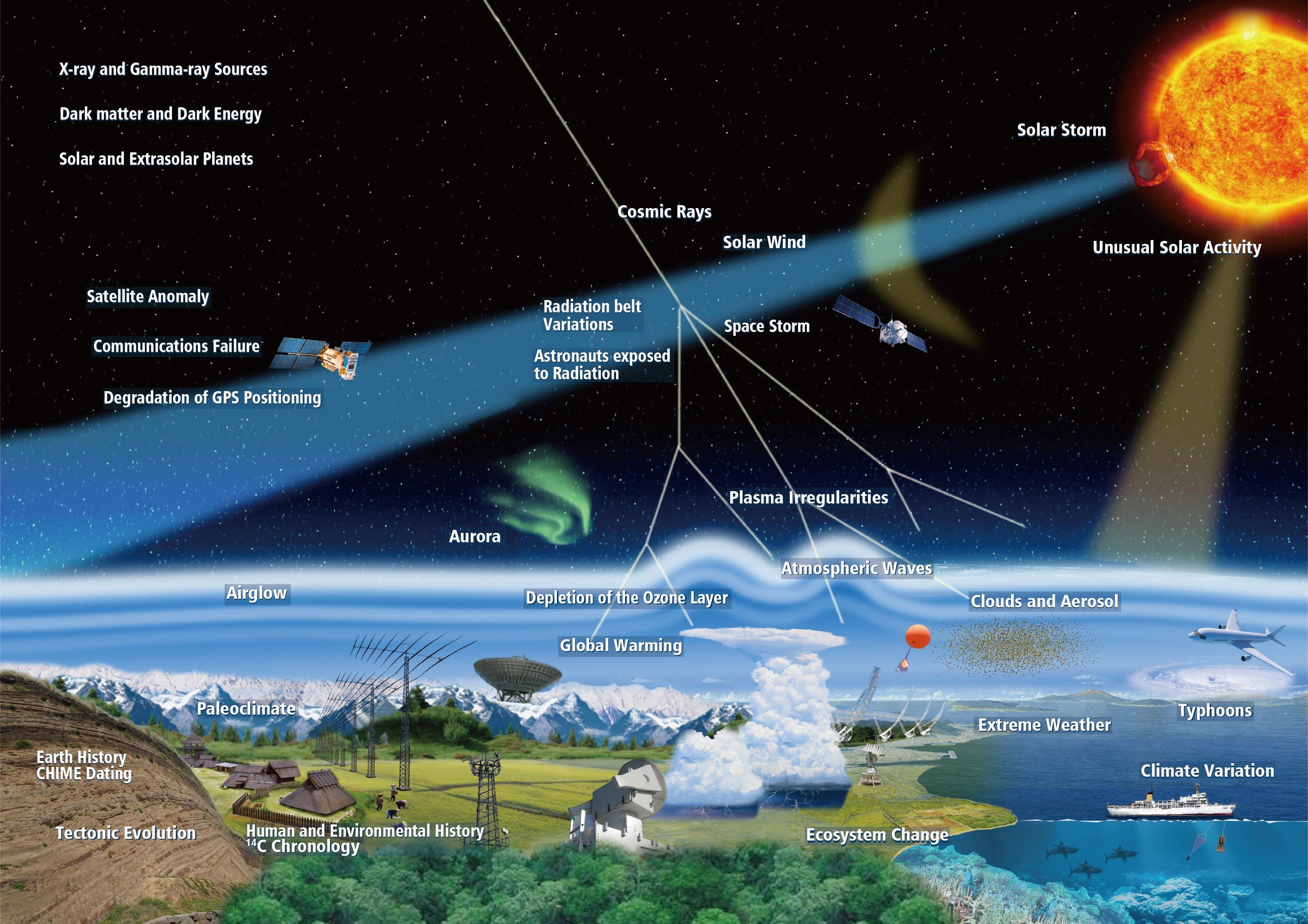
What is the Institute for Space-Earth Environmental Research (ISEE)?
The mission of ISEE is to clarify the mechanisms and relationships between the Earth, the Sun, and cosmic space, treating them as a seamless system, and to contribute to solving issues related to the global environment and human society spreading in space. In addition, ISEE plays a role as the only joint usage/research center linking space science and earth science, and promotes various collaborative research projects.
Our environment comprises various interacting elements and evolves with time. In particular, the dynamics of solar activity sometimes have a great influence on the global environment and human society. A huge solar flare explosion occurring on the solar surface severely disturbs the Earth's magnetic field, the atmosphere, and the radiation environment, and it may cause serious impacts on satellites, electric power, communications, aviation, and other infrastructure. Long-term variation in sunspot activity may also affect the global climate. Cosmic rays arriving from far away in the universe are also an element of our environment, and the cosmogenic isotopes in tree rings provide us with valuable information to explore past environments. On the other hand, it is important to understand the mechanisms of climate change and extreme weather phenomena, both of which may cause disasters. For this purpose, it is necessary to clarify not only the greenhouse effect but also the hydrological circulation, in which aerosols, clouds, and precipitation interact, as well as the interaction between meteorological dynamics and the land–ocean ecosystem with solar influence.
In order to explore the space–earth environment, interdisciplinary research across different fields is necessary. ISEE aims to play a role in promoting domestic and international research collaboration between researchers, and to develop a new discipline of space–earth environmental research. We look forward to your continued support and cooperation.
Education at ISEE
ISEE offers primarily graduate programs (Graduate School of Science, Graduate School of Engineering, and Graduate School of Environmental Studies in Nagoya University), but also provides opportunities for both undergraduate and postdoctoral study.Education page at ISEE HP
Outreach activities at ISEE
For purposes of science education, ISEE publishes booklets on many topics in space science. These publications include comic books written by the popular cartoonist "Hayanon," featuring humorous characters and explaining scientific themes in a friendly way. The booklets are suitable for the general public as well as for school children. ISEE publishes these booklets in collaboration with SCOSTEP. These booklets can be downloaded at the following site.Outreach page at ISEE HP



ISEE Introduction Movie with English Subtitles
| Address | 464-8601 Furo-cho, Chikusa-ku, Nagoya, Aichi, Japan |
|---|---|
| Web site, SNS | https://www.isee.nagoya-u.ac.jp/en/ |
Japan Meteorological Agency
Japan Meteorological Agency
Notice
The online booth of the Japan Meteorological Agency is intended solely for recruitment purposes.Please note that it is not open to non-Japanese applicants.
If you are interested in our activities and responsibilities, please visit our official English website.
| Address | 105-8431 3-6-9 Toranomon, Minato City, Tokyo, Japan |
|---|---|
| TEL | 03(6758)3900 |
| Web site, SNS | https://www.jma.go.jp/jma/indexe.html |
JAPEX
JAPEX

◆①
Contents
◆②
Contents
Download
◆③
Contents
◆④
①× ×, 2021(×)13:00~14:00
②× ×, 2021(×)13:00~14:00
Please click here to contact us (Zoom will start)
| Address | 100-0005 東京都千代田区丸の内一丁目7番12号サピアタワー |
|---|---|
| TEL | 03-6268-7000 |
| Web site, SNS | https://www.japex.co.jp/en/ |
JGI, Inc.
JGI, Inc.
◆①
Contents
◆②
Contents
Download
◆③
Contents
◆④
①× ×, 2021(×)13:00~14:00
②× ×, 2021(×)13:00~14:00
Please click here to contact us (Zoom will start)
JOGMEC
JOGMEC

◆①
Contents
◆②
Contents
Download
◆③
Contents
◆④
①× ×, 2021(×)13:00~14:00
②× ×, 2021(×)13:00~14:00
Please click here to contact us (Zoom will start)
| Address | 105-0001 東京都港区虎ノ門2-10-1 虎ノ門ツインビルディング |
|---|---|
| TEL | 03-6758-8000 |
| Web site, SNS | https://www.jogmec.go.jp/index.html |
Katsujima Co., Ltd.
Katsujima Co., Ltd.
| Address | 125-0063 東京都葛飾区白鳥4-16-18 |
|---|---|
| TEL | 03-3603-7111 |
| FAX | 03-3603-7180 |
| Web site, SNS | https://www.katsujima.co.jp |
Lazoc Inc. / Optical Fiber Sensing
Lazoc Inc. / Optical Fiber Sensing

We will be exhibiting an actual DAS (Distributed Acoustic Sensor) with a demonstration. We have improved performance to a measurement range of 100km and a maximum number of measurement points in the distance direction of 25,000. We are a venture company developing optical fiber sensing systems. Please stop by our booth.
| Address | 124-0002 1-5-3, Nishi-Kameari, Katsushika, Tokyo, Japan |
|---|---|
| TEL | 03-6662-7270 |
| FAX | 03-6662-7274 |
| Web site, SNS | https://lazoc.jp/english/ |
National Astronomical Observatory of Japan, TMT Project/ALMA Project
National Astronomical Observatory of Japan, TMT Project/ALMA Project
Contents
ALMA projectThirty Meter Telescope
ALMA project
ALMA is one of the world's largest radio telescopes located in Chile, consisting of 66 antennas.
Constructed and operated with international cooperation led
on behalf of Europe by ESO,
on behalf of North America by NRAO,
on behalf of East Asia by NAOJ.
2023 marks the 10th anniversary of its inauguration!
Radio wave observations with ALMA allow us to observe dust and gas which are the material of planets.
ALMA can observe them with unprecedented high angular resolution and high sensitivity.
Thirty Meter Telescope
TMT is an ambitious project with plans to construct on Hawai`i an extremely large telescope with an aperture of 30m with the cooperation of five countries including Japan. The major goals of TMT include search for signatures of life on extrasolar planets and the history of our solar system.
◆TMT Overview
・Aperture:30 meters / 492 segment mirrors
・Wavelength range:0.31-28μm
・Diffraction limit:8miliarcsec (at 1μm)
・Sensitivity:More than 100 times better than conventional telescopes
(when observing a point light source with adaptive optics)
Brochure
In Search for Life on Extrasolar Planets
Our Solar System
Science Teams
Maunakea and TMT
In Search for Life on Extrasolar Planets
◆Direct observations of Earth-like planetsMany planetary systems around stars other than our Sun are being discovered today, and we are learning that there exist planets with various sizes and orbits. Recently, planets similar in size as Earth have been discovered, indicating that there are planetary systems much like our own Solar Sytem. Today, infrared observation has advanced to a point of being able to actually capture images of these planets.
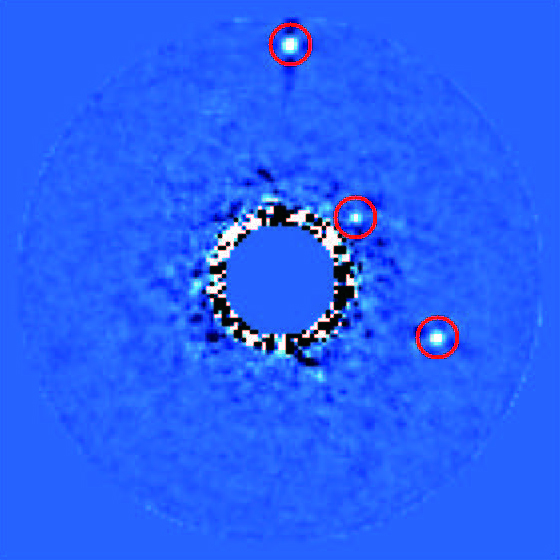
Three Jupiter-like planets around HR8799 discovered by the Subaru Telescope (in red circle). TMT will attempt to directly capture even smaller Earth-like planets. (Credit: CHARIS Team of Princeton University, and NAOJ)
◆Are we alone?
Are there extrasolar planets with existence of life? This is a question common to all humanity. TMT aims to discover signs of life on these planets.
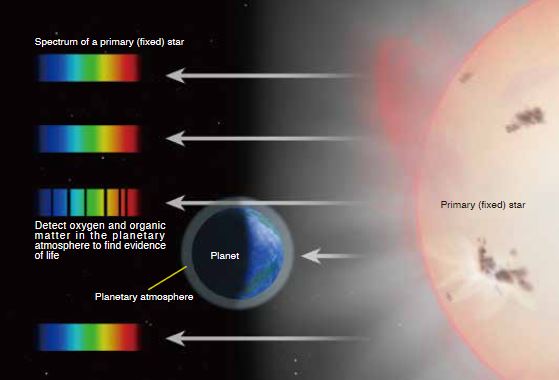
TMT will be able to study the composition of the atmosphere of extrasolar planets through spectroscopic observation. Discovery of oxygen molecules and organic substances could be a signature of existence of extra-terrestrial life.
Exoplanets with TMT (TIO website)
Our Solar System
The advent of TMT will enable us to tackle long-standing questions concerning the formation of the solar system, the origin of planetary volatiles, the physics of the ice and gas giants, and the unraveling of the complex dynamical history recorded in the Kuiper belt.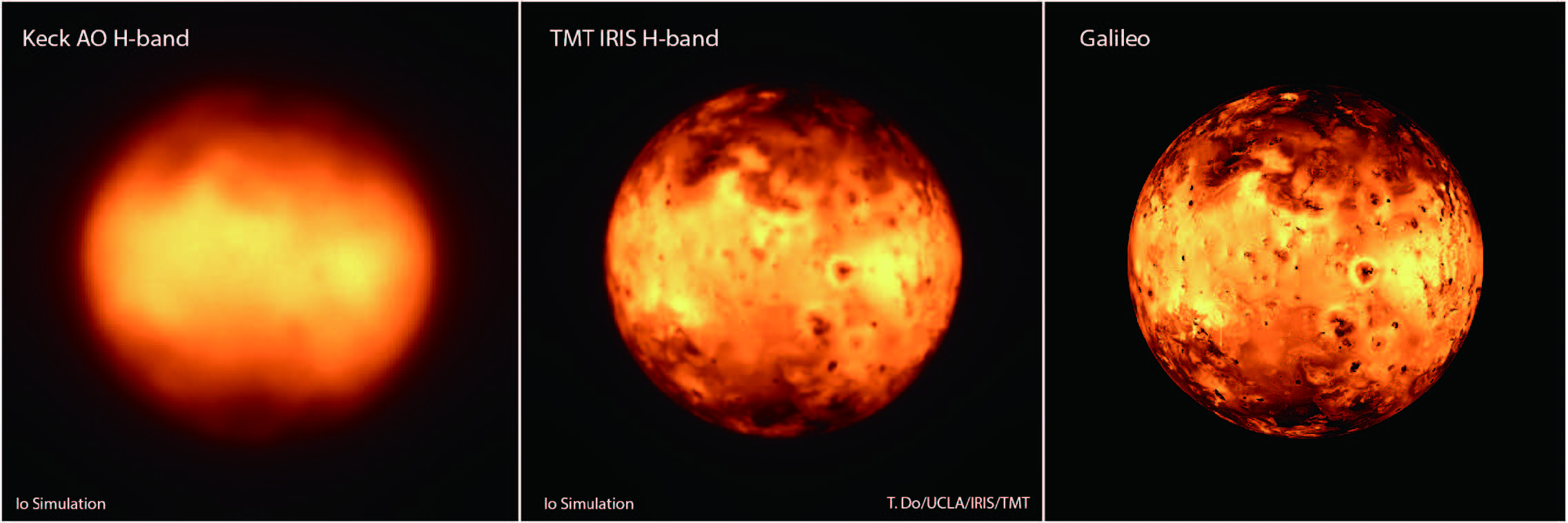
The view of Jupiter's moon Io when observed using adaptive optics. The image on the left is a simulation of a conventional telescope with an aperture of 8 to 10 meters, and the image in the center is a simulation of TMT. The image on the right is the actual image taken by the Galileo spacecraft (Credit: T. Do/UCLA/IRIS)
Our Solar System with TMT (TIO website)
Science Teams
The TMT International Science Development Teams (ISDTs) are groups of researchers who work together to provide scientific guidance and feedback to the TMT project, to stimulate planning for future TMT observing programs, and to build connections between the TMT and the international astronomical communities. The ISDTs foster scientific collaboration across the TMT partnership and beyond, into the broader astronomical community. Prospective applicants are encouraged to contact the conveners to learn more about the ISDTs and their activities.ISDTs (TIO website)
Maunakea and TMT
TMT is planned to be built on Maunakea, Hawai`i. Maunakea is a 4000-m mountain with gently inclined slopes, isolated in the mid-Pacific Ocean from any other land mass, which makes the mountain one of the exceptionally well-endowed sites for astronomical observations in the world. Maunakea is also a sacred place for the people of Hawai`i, connecting them to their k?puna (ancestors) and akua (gods). It represents a symbol of the Hawai`i culture deeply rooted in nature. We are committed to the TMT Project without impeding traditional and customary cultural practices of Hawai`i.
| Address | 181-0015 2-21-1 Osawa, Mitaka, Tokyo |
|---|---|
| Web site, SNS | https://www.nao.ac.jp/en/ |
Newtech Co., Ltd.
Newtech Co., Ltd.
◆①
Contents
◆②
Contents
Download
◆③
Contents
◆④
①× ×, 2021(×)13:00~14:00
②× ×, 2021(×)13:00~14:00
Please click here to contact us (Zoom will start)
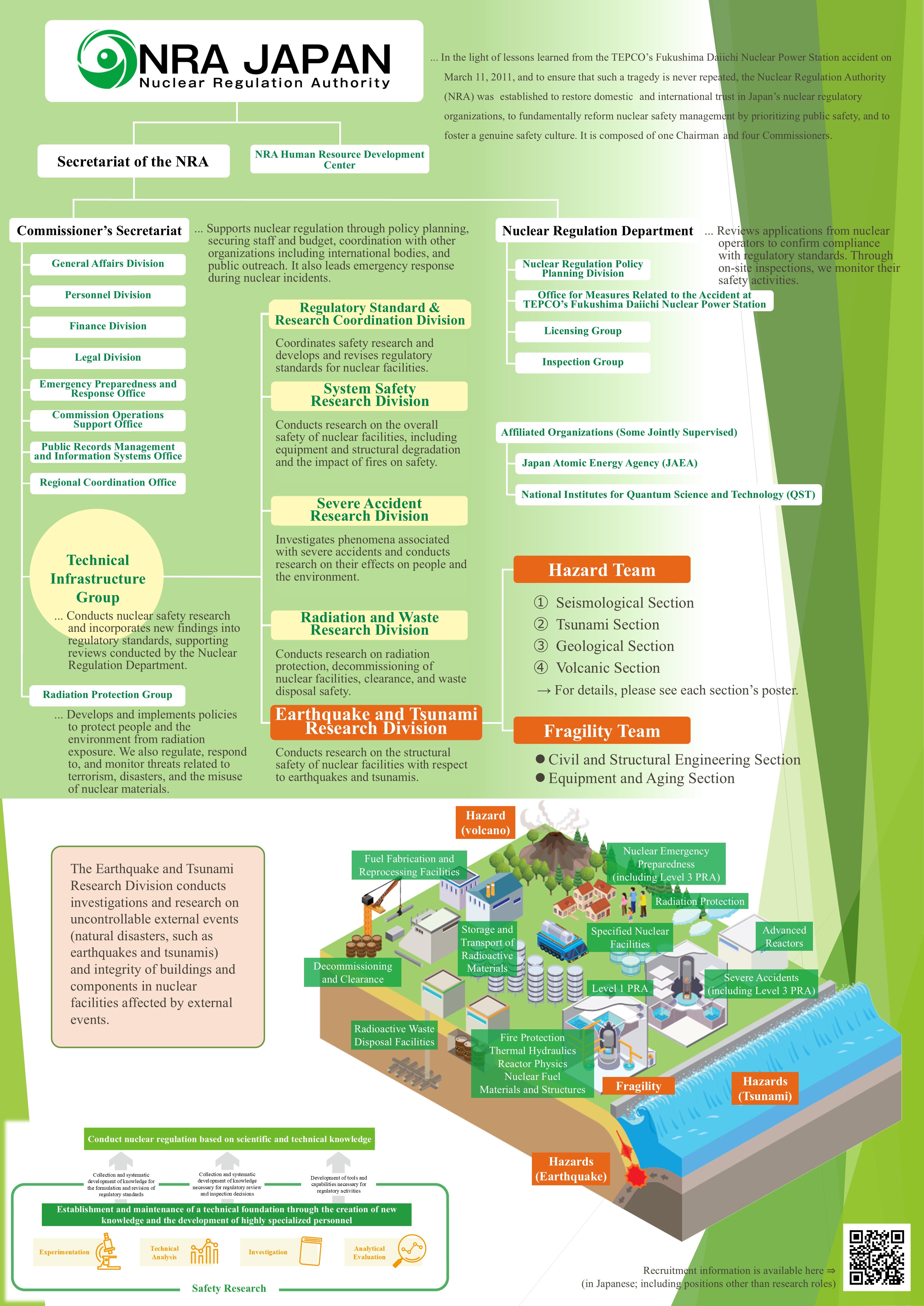
NRA JAPAN Division of Research for Earthquake and Tsunami
NRA JAPAN Division of Research for Earthquake and Tsunami

◆Introduction of the Division of Research for Earthquake and Tsunami, NRA JAPAN
NRA JAPAN aims to continuously improve safety regulations to implement reliable nuclear regulations to protect people and the environment.
Division of Research for Earthquake and Tsunami conducts safety research on external events (natural disasters such as earthquakes and tsunamis) that cannot be artificially controlled, and on the structural integrity of nuclear facilities such as buildings and equipment that are affected by such events.
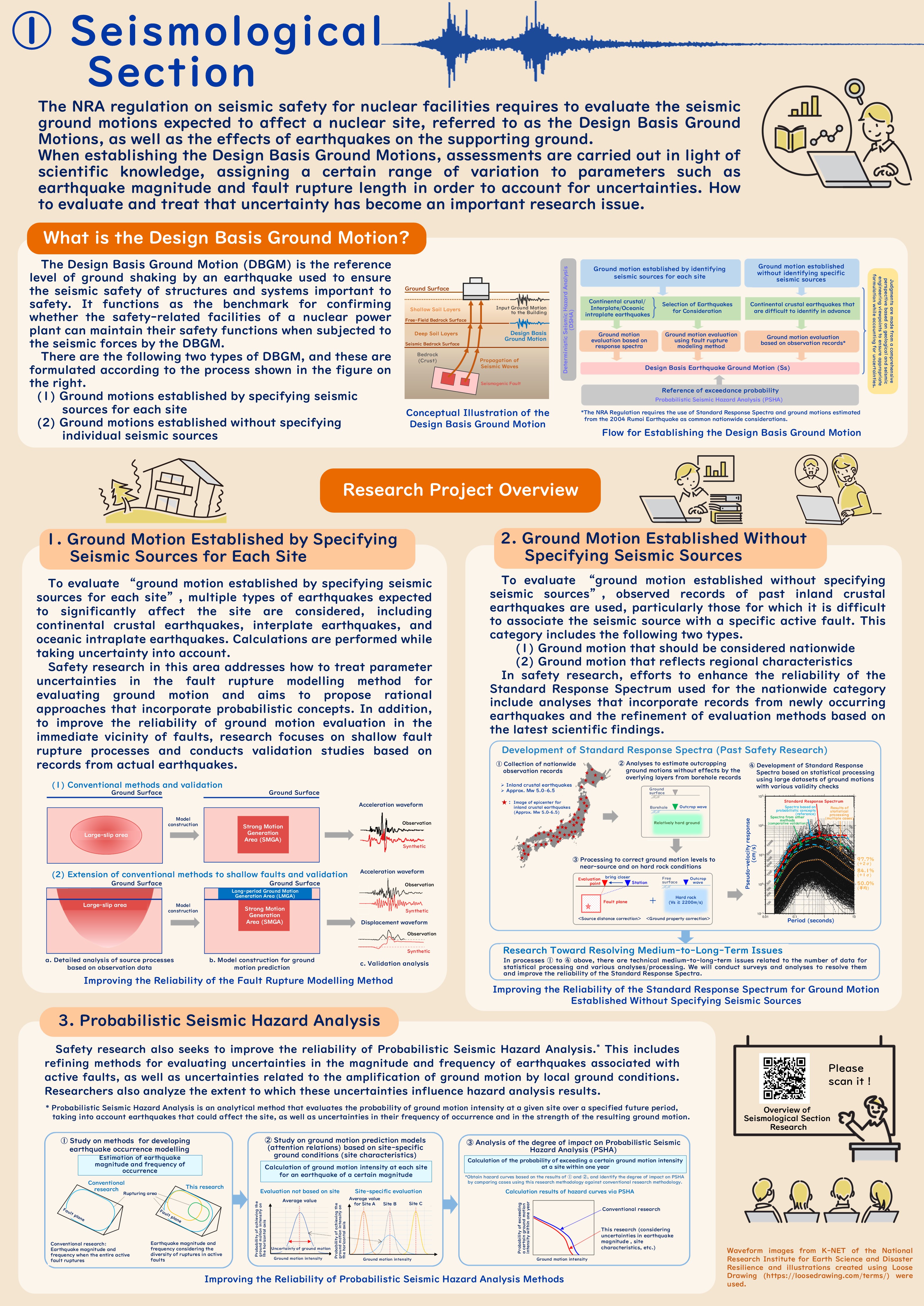
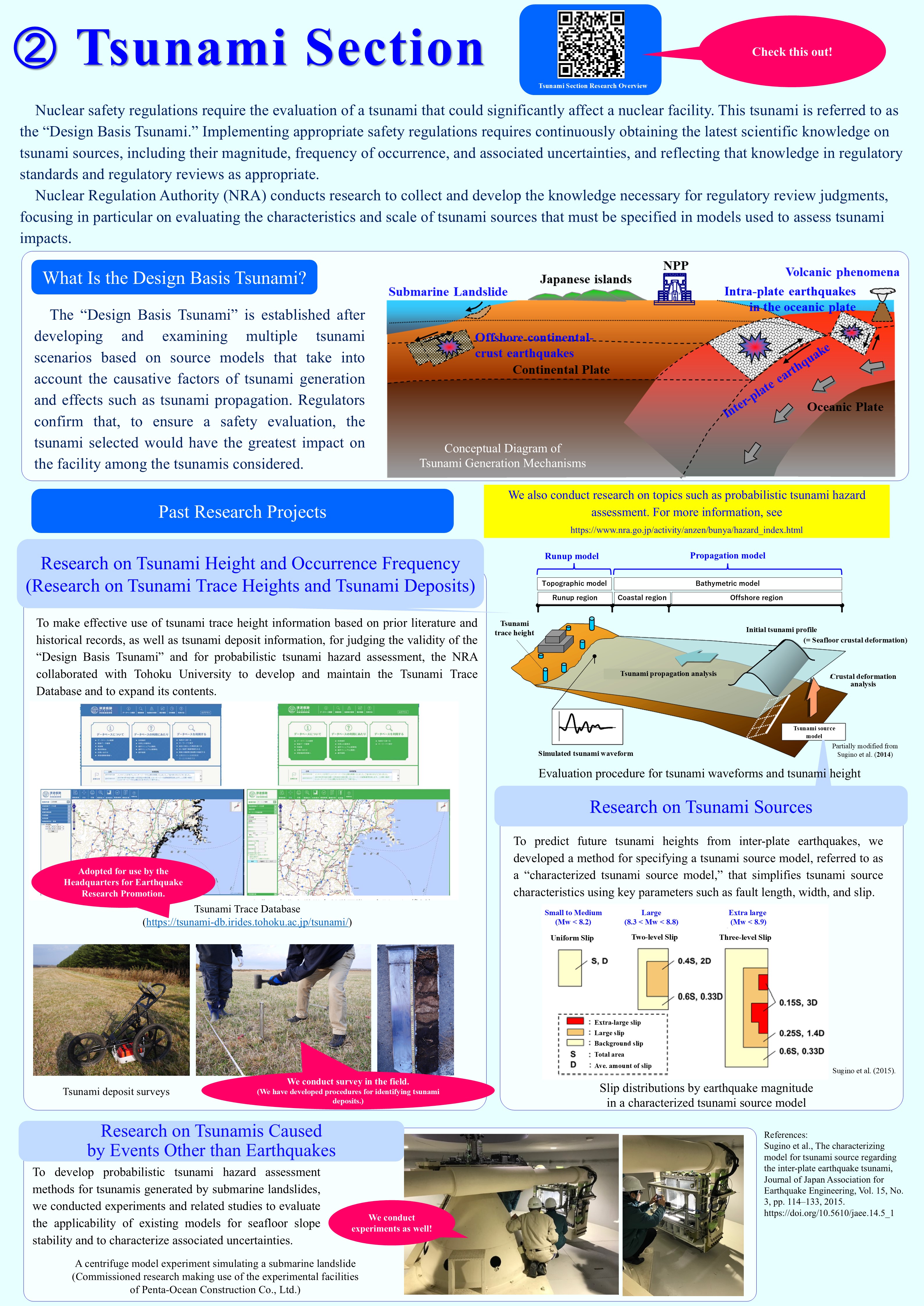
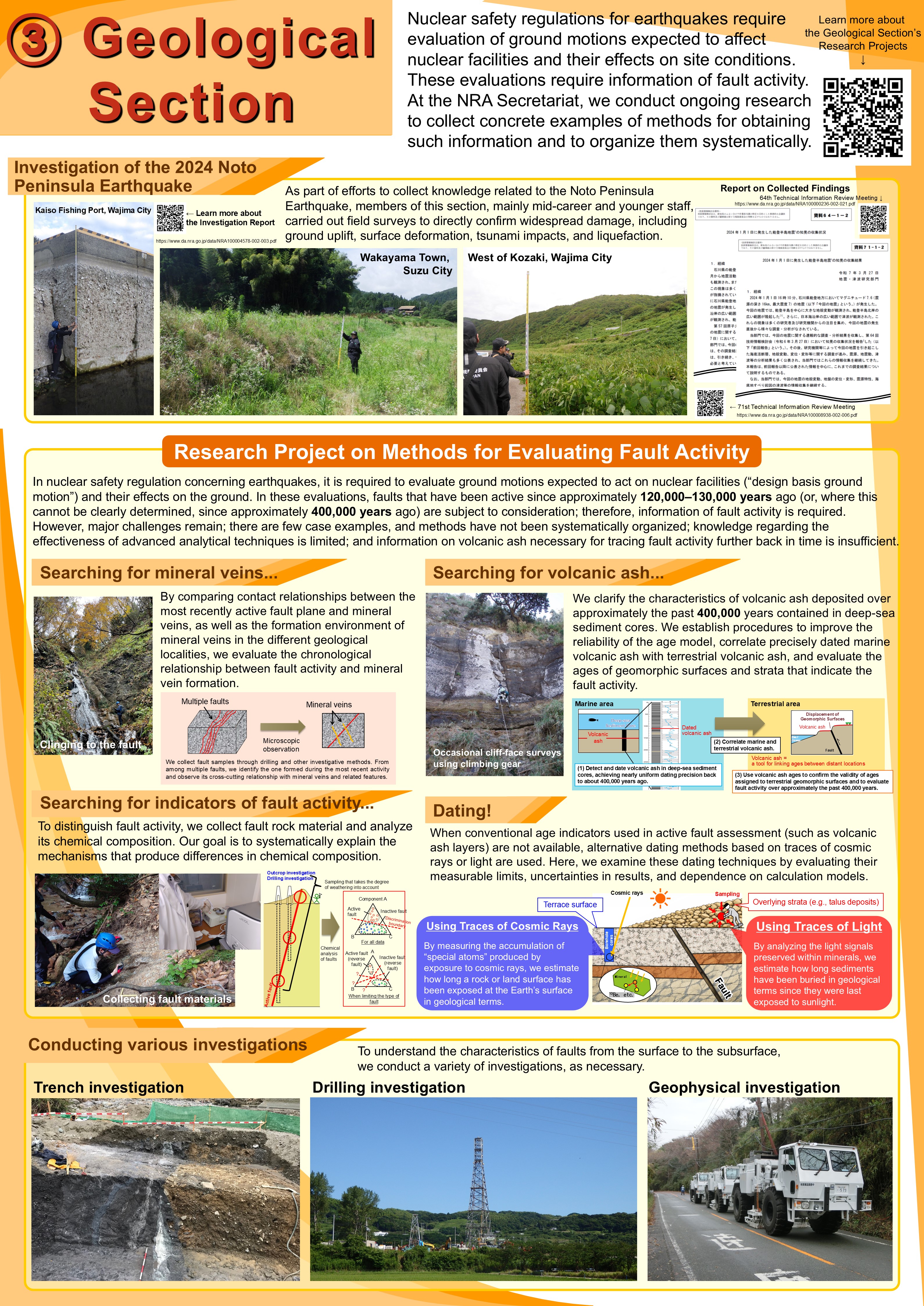
The following are some examples of our research in the field of natural hazards.
◆Introduction of Booth Posters
Position of the Division of Research for Earthquake and Tsunami in NRA JAPAN
https://www.jpgu.org/meeting_j2026/exhibition/public/assets/data/a03/03_en.jpg
Section 1 : Seismology
https://www.jpgu.org/meeting_j2026/exhibition/public/assets/data/a03/04_en.jpg
Section 2 : Tsunami
https://www.jpgu.org/meeting_j2026/exhibition/public/assets/data/a03/05_en.jpg
Section 3 : Geology
https://www.jpgu.org/meeting_j2026/exhibition/public/assets/data/a03/02_en.jpg
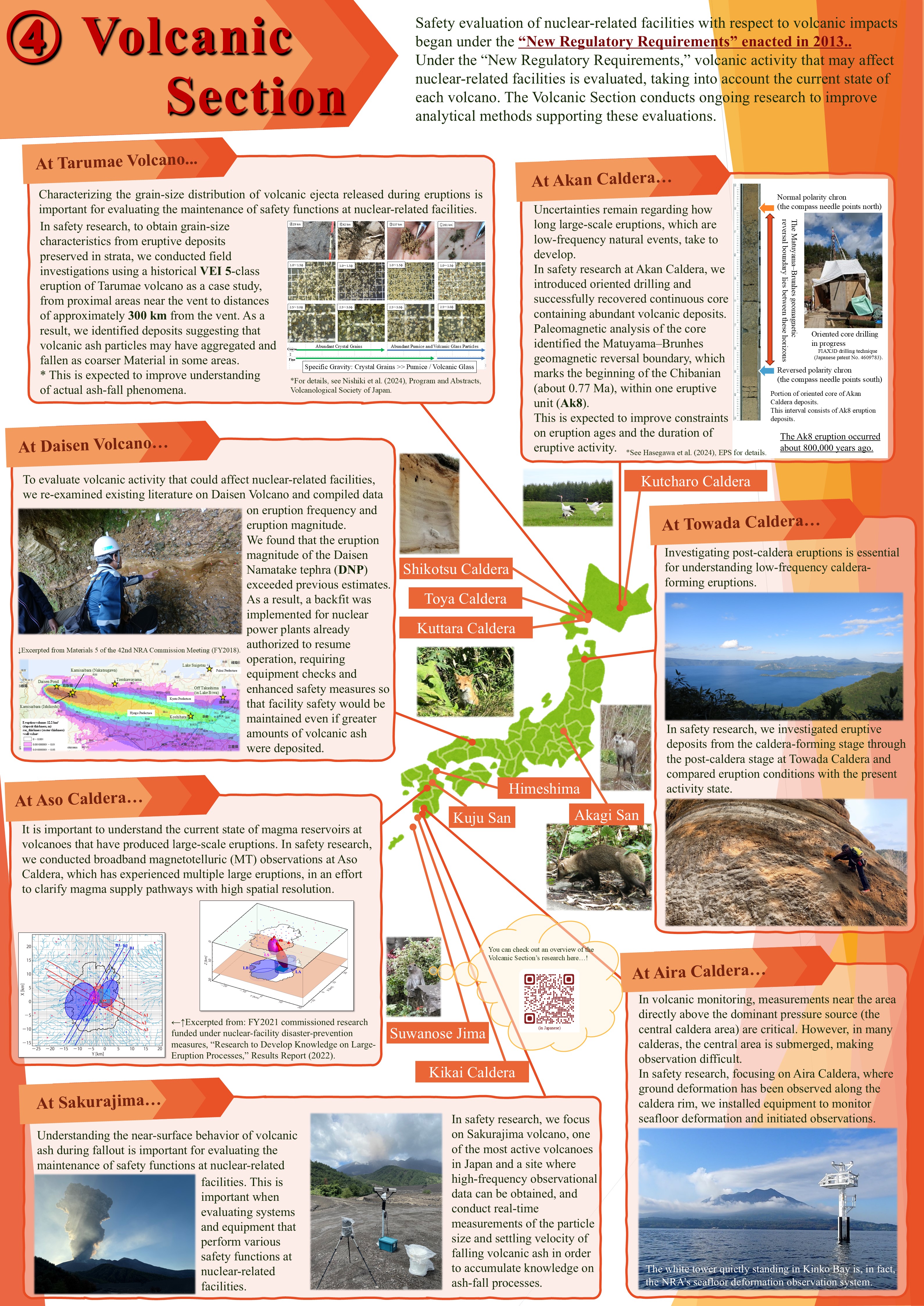
Section 4 : Volcano
https://www.jpgu.org/meeting_j2026/exhibition/public/assets/data/a03/01_en.jpg
◆Introduction of limited exhibition at the local booth
At the on-site booth, we are offering videos of real work scenes, a hands-on papercraft activity titled “What Is a Fault? Build It and Figure Out Its Past Movements”, and a “Tephra Quiz” using a stereomicroscope.
Please feel free to stop by our on-site booth as well.
◆Various pamphlets and introductory videos
NRA JAPAN pamphlet (in Japanese)
NRA JAPAN pamphlet DL
Research Division pamphlet (in Japanese)
Research Division pamphlet DL
Video: Introduction of the organization from newly hired staff (in Japanese)
Video: Introduction of the organization from a mid-career staff member (in Japanese)
Video: Introduction of the organization from research staff (in Japanese)
Employment Opportunities at the NRA JAPAN is here (in Japanese)
https://www.nra.go.jp/nra/employ/index.html
| Address | 106-8450 Roppongi First Bldg 15F, 1-9-9 Roppongi, Minato-ku, Tokyo |
|---|---|
| TEL | 03-5114-2226 |
| Web site, SNS | https://www.nra.go.jp/english/index.html |
NV5 GEOSPATIAL SOLUTIONS K.K.
NV5 GEOSPATIAL SOLUTIONS K.K.
◆①
Contents
◆②
Contents
Download
◆③
Contents
◆④
①× ×, 2021(×)13:00~14:00
②× ×, 2021(×)13:00~14:00
Please click here to contact us (Zoom will start)
Okayama University Institute for Planetary Materials
Okayama University Institute for Planetary Materials

Institute for Planetary Materials (Okayama University)
Institute for Planetary Materials, Okayama University, located in Misasa, Tottori Prefecture, a famous hot spring resort, has evolved from materials science of the Earth's interior to broader materials science research on the planets, the universe, and the origin of life. We have developed high-pressure and high-temperature experimental techniques that continuously reproduce the temperature and pressure conditions from the Earth's surface to the Earth's core, as well as analytical chemistry techniques that analyze major and trace elements, isotopic compositions, and dating of inorganic materials on a seamless scale, leading the materials science of the Earth and planets. For more information about the Institute and its faculty members, please refer to the Institute's webpage.
◆Organization and Research Activities
Division for Planetary Materials Experimental Physics
The aim of this division is to elucidate the structure and physical properties of terrestrial and planetary materials by experimental and computational methods, and to elucidate the internal structure, dynamics, and evolutionary processes of the Earth and planets. Our approaches include the development of ultrahigh-pressure generation techniques, large-volume high-pressure generation techniques, high-pressure and high-temperature in-situ physical property measurement methods, atomic-level structural analysis of materials, and first-principles calculations for physicochemical understanding.
Division of Planetary Materials Analytical Chemistry
Our objective is to understand the origin, evolution, and dynamics of the Earth and planets based on high-precision quantitative analysis, mass spectrometry, and spectroscopic analysis of terrestrial and extraterrestrial materials. To conduct these studies, we are developing comprehensive and advanced analytical methods and constructing a "Comprehensive Analysis System for Earth and Planetary Materials (CASTEM24remote)," which integrates different analytical instruments that can be operated remotely from outside the institute.
Division of Planetary Surface Environment Science
This division was recently established with the goal of exploring the evolution of Earth's and other planetary surface environments from historical to future perspectives. We examine a range of phenomena, from large-scale geological and geomorphological processes on planetary surfaces to water-rock interactions at the molecular level, utilizing simulation experiments in space chambers, remote sensing technologies and terrestrial analogues. Beyond fundamental research, we are committed to conducting studies that support global environmental preservation and practical research aimed at future human colonization of extraterrestrial planets.
◆Joint Usage / Research Center
The Institute for Planetary Materials (IPM) is recognized by the Ministry of Education, Culture, Sports, Science and Technology (MEXT) as a Joint Usage/Collaborative Research Center and provides domestic and international researchers and students with opportunities to use its experimental and research facilities and the associated technology and knowledge. The institute also promotes empirical materials science research using methods such as chemical analysis, dating, and structural analysis of materials. If you are interested, please contact us for more information.
◆Graduate school
The Planetary Material Science Course of the Earth Environment and Life Science Degree Program at Okayama University has been established for graduate student study at the Institute, and offers two educational programs: the Master's Course and the Doctoral Course.Among these, graduate students who choose the "Blue Planets Special Course" at the time of admission to the Master’s Course will receive an integrated education program that provides consistent education from the Master’s Course through completion of the Doctoral Course. We prepare a unique scholarship and research assistantship for graduate students. With many researchers and students from abroad, students can concentrate on their research in an international environment.
◆Misasa International Student Intern Program(MISIP)
An internship program using the Institute's facilities is offered to 3rd and 4th year undergraduate students and master's students for six weeks every July and August. Students can participate in research projects under the guidance of our researchers using a variety of experimental and analytical equipment, and experience advanced research. Although we have already closed applications for this year, we plan to continue this program next year, so please consider applying if you are interested.
◆IPM News Letter (downloadable pdf)
IPM News Letter is available at the JpGU on-site booth. It can also be downloaded from the Institute's website.
◆Exhibition room
We have an exhibition room at Misasa to introduce our research activities. A part of the exhibition is also presented at the JpGU on-site booth. The room is still under development, but visitors can enjoy various experiences such as viewing a model of the solar system, displays of high-pressure ice and components of high-pressure experimental apparatus, observation of rock thin sections using a polarizing microscope, and interactive play with a sand box using augmented reality. Walk‑in visits are welcome, but if you contact us in advance, a faculty member may be available to guide you.
| Address | 682-0193 Yamada 827, Misasa, Tottori, Japan |
|---|---|
| TEL | 0858-43-1215 |
| Web site, SNS | https://www.misasa.okayama-u.ac.jp/en/ |
Research Institute for Humanity and Nature (RIHN)
Research Institute for Humanity and Nature (RIHN)

| TEL | 075-707-2100 |
|---|---|
| Web site, SNS | https://www.chikyu.ac.jp/ |
Satellite Observation Center , National Institute for Environmental Studies
Satellite Observation Center , National Institute for Environmental Studies

◆From GOSAT to GOSAT‑GW, launched in 2025
The GOSAT series, the world’s first satellites for greenhouse‑gas observation, is jointly led by MOEJ, NIES, and JAXA. In 2025, GOSAT‑GW launched and began its mission to advance GHG observation.◆Greenhouse gas observation mission by NIES begins
This is a brief introduction to the events leading up to the launch of Global Observing SATellite for Greenhouse gases and Water cycle, GOSAT-GW, on June 29, 2025, and the upcoming mission of the National Institute for Environmental Studies.◆Brochure
The Satellite Observation Center is part of the Earth System Division at the National Institute for Environmental Studies (NIES).
For more information about the Earth System Division, please see the brochure.
Download brochure
For more information about the Earth System Division, please see the brochure.
Download brochure
| Address | 305-8506 16-2,Onogawa,Tsukuba,Ibaraki,Japan |
|---|---|
| TEL | 0298502409 |
| Web site, SNS | https://www.nies.go.jp/soc/en/ |
Seiko Epson Corporation
Seiko Epson Corporation

Seiko Epson Corporation develops and commercializes low-noise, compact 3-axis accelerometers that can be used for earthquake observation, ambient vibration measurement, and infrastructure aging monitoring.
◆ Epson Sensor Website
Low-Noise, Compact 3-Axis Accelerometers
● Provide highly accurate data for earthquake monitoring and infrastructure surveillance, enabling early anomaly detection and rapid response!
● Epson’s proprietary technology achieves low noise performance, high bias stability, and a wide dynamic range!
● Low power consumption with digital output simplifies system design!
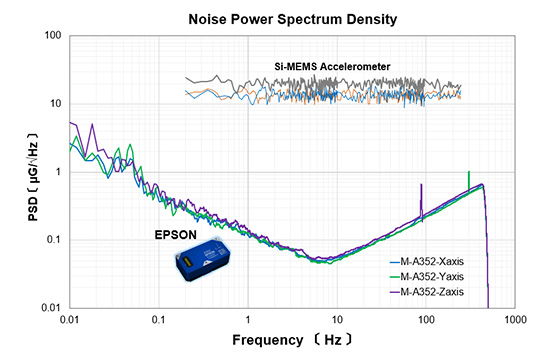
Noise Performance Comparison of M-A370 and M-A352
Datasheet
Contact Us
The M-A370 was introduced at last year’s JPGU 2025.
Promotional Video: Why Epson? — Microdevices for Social Infrastructure Maintenance
Epson Sensor Product Lineup
◆ Accelerometer Product Lineup◆ IMU Product Lineup
| Address | 399-0293 281 Fujimi, Fujimi-machi, Suwa-gun, Nagano Prefecture, Japan |
|---|---|
| Web site, SNS | https://www.epsondevice.com/sensing/en/ |
SoftBank Corp./ALES Corp./Consortium to utilize the SoftBank original reference sites for Earth and Space Science
SoftBank Corp./ALES Corp./Consortium to utilize the SoftBank original reference sites for Earth and Space Science

SoftBank Corp.
"ichimill" is a high-precision positioning service that has been introduced by over 2,000 companies.ichimill is a service that enables advanced positioning with an error of a few centimeters by performing RTK positioning using signals received from GNSS such as the quasi-zenith satellite "Michibiki".
With general GNSS (GPS), the positioning error is around 5m to 10m, but SoftBank distributes "correction information" via the network. By performing RTK positioning calculations using the signals received by the GNSS receiver, real-time positioning with an error of several centimeters is possible.
By utilizing its own base station installation locations, SoftBank has installed its own reference sites (fixed stations) required for RTK positioning in more than 3,300 locations nationwide. No reference site preparation is required by the customer.
Because reference sites are deployed at a high density throughout the country, stable positioning can be achieved with very short switching times (handovers). Continuous high-precision positioning is possible even when traveling long distances, such as crossing reference sites.
ALES Corp.
■Centimeter-level positioning service (for individual customers)Correction information generated by the ""ALES distribution system"" using observation data provided by SoftBank Corp. will be distributed to the customer's GNSS receiver via the Internet (Ntrip). By using this correction information, this service enables highly accurate positioning with an error of a few centimeters in real time.
■Post-processing data service (for corporate customers)
This is a service that provides corrected data generated based on observation data from unique reference sites provided by SoftBank Corp. in file format (RINEX) for post-processing. Highly accurate positioning is possible by performing post-processing using observation data acquired by the customer's GNSS receiver and this data.
Consortium to utilize the SoftBank original reference sites for Earth and Space Science
This consortium aims to commercialize research results in the field of earth science and create new earth sciences by utilizing data from SoftBank's high-density GNSS observation network (unique reference sites).The center of our activities is the verification of data utilization methods in a wide range of earth science fields, such as earthquakes and meteorology, and is expected to greatly contribute to the prediction of natural disasters and disaster prevention and mitigation. SoftBank and ALES plan to make proposals for commercialization and disaster prevention/mitigation based on the research results. The consortium will also advance research in fields such as earthquakes, volcanoes, meteorology, and the ionosphere.
| Address | 105-7529 23F, Office Tower, Tokyo Portcity Takeshiba 1-7-1 Kaigan, Minato-ku, Tokyo 105-0022, Japan |
|---|---|
| Web site, SNS | https://www.softbank.jp/business/service/iot/ichimill/ |
WPI-AIMEC (Advanced Institute for Marine Ecosystem Change), Tohoku University & JAMSTEC
WPI-AIMEC (Advanced Institute for Marine Ecosystem Change), Tohoku University & JAMSTEC
◆①
Contents
◆②
Contents
Download
◆③
Contents
◆④
①× ×, 2021(×)13:00~14:00
②× ×, 2021(×)13:00~14:00
Please click here to contact us (Zoom will start)