


Pleanary Speakers
- Prof. Surendra P Shah
- Prof. Ruben Snellings
- Prof. Gaurav Sant
- Prof. Hegoi Manzano
- Prof. Chi-sun Poon
- Prof. Tung-Chai Ling
- Prof. Alejandro Fernandez-Martinez
- Dr. Maciej Zając
|
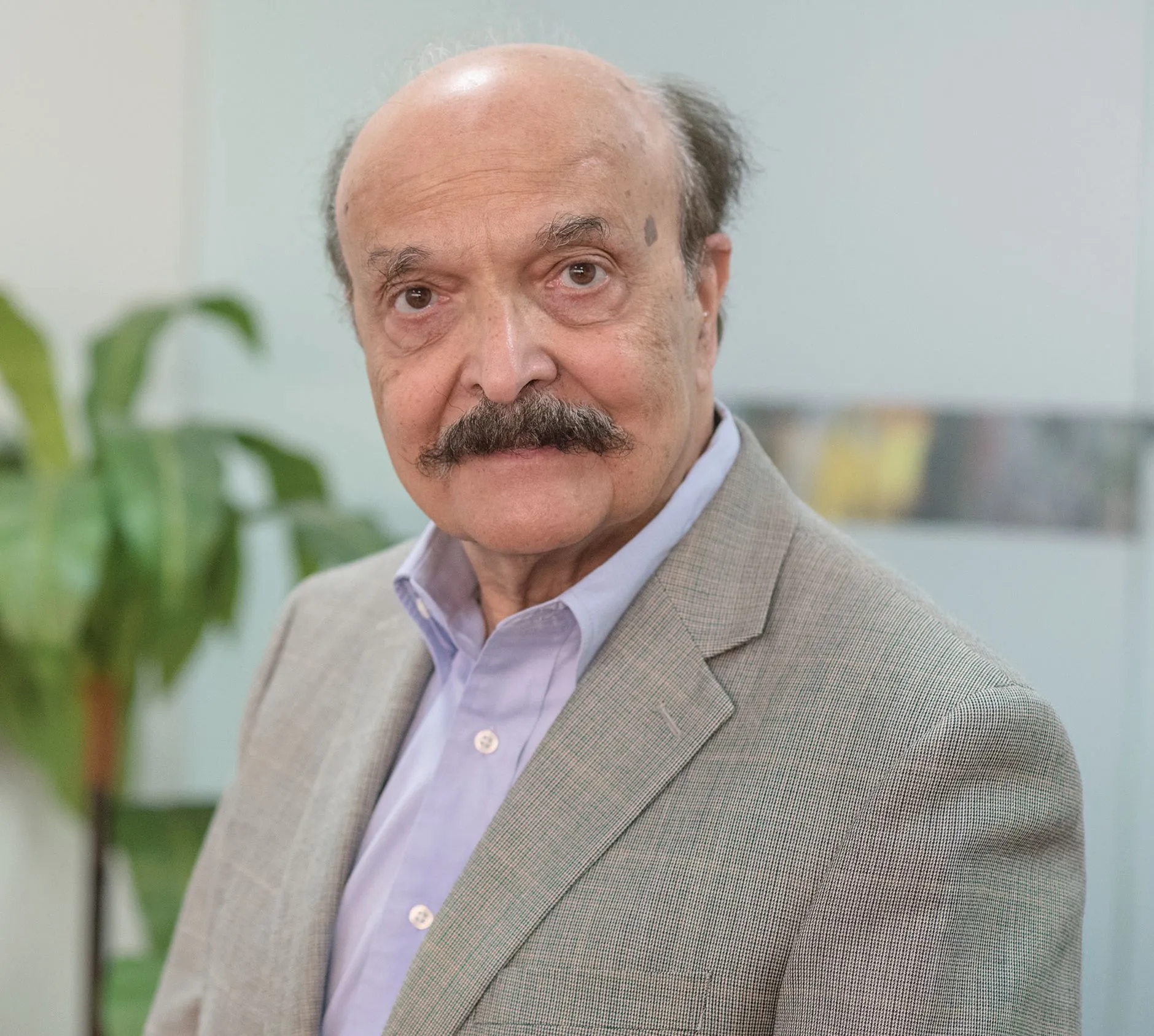
Prof. Surendra P Shah Dr. Surendra Shah is distinguished for his seminal research on synthesizing engineering mechanics and material science. Professor Shah has made unique, original and extensive contributions to better understand and define properties of cement-based materials and developing new advanced materials which has become a world standard in these fields. He is responsible for developing high performance concrete, fibre reinforced concrete, self-consolidating concrete, shrinkage reducing admixtures, carbon nano-tube reinforced cement based composites and extrusion processing of concrete. These have revolutionized the way modern concretes are used worldwide. Dr. Shah has been recognized with many awards and honors, notably he is a member of the National Academy of Inventors, National Academy of Engineering, Academy of Athens, Chinese Academy of Engineering, Indian Academy of Engineering, German Academy of Engineering and the Russian Academy of Engineering. He is Walter P Murphy Emeritus Professor at Northwestern University, where he was the director of pioneering NSF funded Science and technology Centre on Advanced Cement based Materials. |
|

Contents of the lecture:
Carbon Conscious Concrete and Global Warming Potential
Concrete is the most widely used construction material in the world by mass, and its demand is expected to continue increasing in response to rapid urbanization. Compared to other materias such as steel and polymers, concrete has considrably lower GWP. But we use a large amount of concrete .Multiple attemts are being made to reduce GWP of concrete.Approaches using multifunctional aditives are prsented here. CO2 utilization in construction materials offers a multifaceted strategy for reducing the carbon footprint of the construction industry. Further technological advancements in this area can contribute significantly to mitigating climate change. By incorporating CO2 into construction materials through mineral carbonation techniques such as accelerated CO2 curing, carbonation treatment of by-products and recycled aggregates, and CO2 injection into freshly mixed concrete or mixing water, the construction industry can substantially reduce its carbon footprint. In parallel, the incorporation of nanomaterials has been shown to enhance CO2 uptake while improving the interfacial properties between aggregates and the cementitious matrix, which is essential for improving mechanical performance. In addition, the ability to control carbonate polymorph formation during CO2 mineralization will be discussed. Overall, the presentation provides insight into emerging solutions currently being explored in the field of concrete science to reduce the carbon footprint of construction materials.
| Prof. Ruben Snellings Ruben Snellings is an associate research professor at KU Leuven, Belgium. He earned a PhD in geology at KU Leuven on the pozzolanic reactivity of natural zeolites. After his PhD, he was a postdoctoral researcher at UGent (Belgium) and a Marie Curie Fellow at EPFL (Switzerland), specialising in Xray diffraction and electron microscopy of supplementary cementitious materials. He then worked eight years at VITO as senior researcher before returning to KU Leuven. In 2016 he received the RILEM Gustavo Colonnetti Medal. He currently leads the Applied Mineralogy group at KU Leuven, focusing on sustainable and innovative construction materials using primary and secondary resources as well as mineral carbonation technologies. |  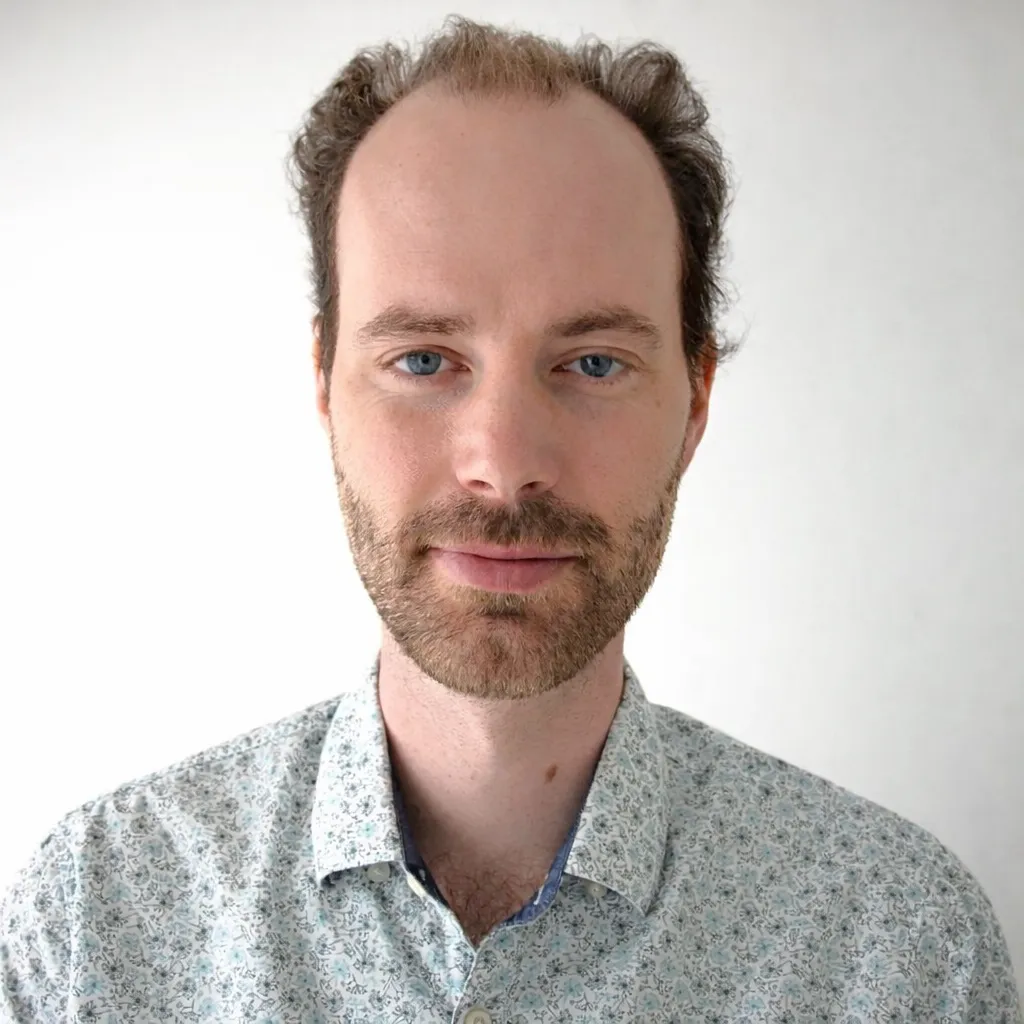 |
Contents of the lecture:
Mineral carbonation hardening – niche or mainstream?
Mineral carbonation is an innovative and rapidly developing field that is expanding into various construction material application domains. The conversion of CO2 into solid, stable mineral carbonates is considered to be a promising and potentially viable way to reduce, store and use carbon emissions. Mineral carbonation usually is a slow process, yet can be accelerated in various ways and applied to a wide range of precursors. This has led to a multitude of processes (wet, moist, dry, supercritical,…) and applications under investigation, development and implementation.
In this lecture, recent advances in mineral carbonation hardening processes and products are reviewed. While industry firsts are appearing across continents, carbonation hardening is a complex process that is often only phenomenologically understood based on empirical experimentation. Recent advances and remaining knowledge gaps in quantitative understanding of carbonation hardening will be discussed. Opportunities and challenges in product development and process upscaling will be discussed based on actual examples, stressing the importance of flanking regulation to support further economic development from niche to mainstream production.
On a more general note, it will be stressed that the expanding field of mineral carbonation requires sharing experiences, understanding and best practices to build a common knowledge base and bring mineral carbonation products from the lab to the market. In conjunction, we highlight the activities of RILEM TC 309-MCP as regards establishing terminology and material characterisation methods while exchanging and reporting on state-of-the-art mineral carbonation processes and products.
|
Prof. Gaurav Sant |  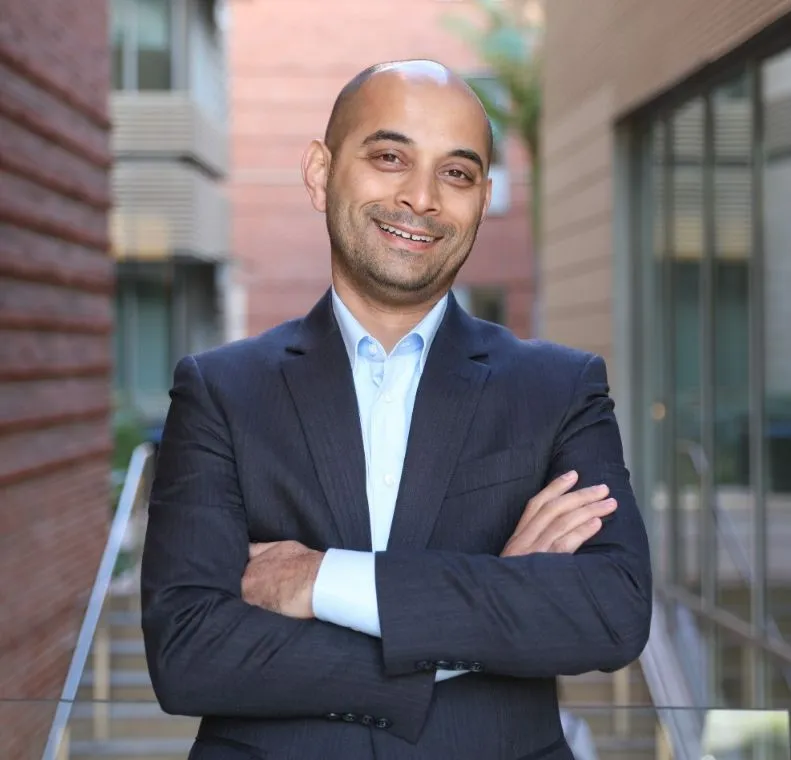 |
Content of the lecture:
Ambient carbonation—the passive uptake of atmospheric carbon dioxide (CO₂) into the alkaline pore solution of concrete—has been proposed to mitigate CO2 emissions from cement production. Herein, we apply thermodynamic and diffusion-based analyses within a Monte Carlo framework to evaluate the extent and rate of ambient carbonation across concrete formulations and geometries (i.e., described by their surface-to-volume ratio, 0.01 ≤ s/v ≤ 80, m-1), globally. The analysis indicates that, by 2030, the carbonation of concrete placed in service, globally, under ambient conditions, is projected to uptake ~0.23 GtCO₂ annually (i.e., <10% of annual cement clinker emissions). Thus, the amount of CO₂ sequestered by ambient carbonation is negligible compared to the quantities emitted during cement production. Importantly, this analysis underscores the importance of prioritizing the net present value (NPV) of industrial decarbonization and of advancing intentional climate change mitigation solutions that deliver meaningful and timely reductions in anthropogenic CO2 emissions.
|
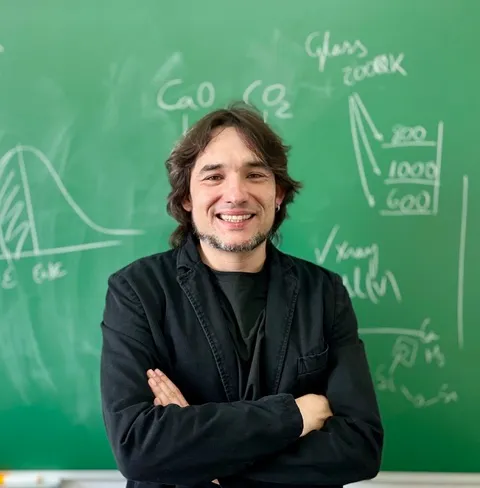
Prof. Hegoi Manzano Hegoi Manzano obtained his PhD in Physical Chemistry from the University of the Basque Country (UPV/EHU) in 2010, after completing an industrial PhD at TECNALIA, a research and development organization. His doctoral thesis focused on the atomistic modelling of cement-related materials. He subsequently joined the Massachusetts Institute of Technology (MIT) as a postdoctoral researcher for two years, where he worked on the development of reactive force fields and their application to cementitious materials. In 2012 he returned to the UPV/EHU, where he held several postdoctoral positions until 2015, including a Juan de la Cierva fellowship. In that year he obtained a position as Assistant Professor in the Department of Physics at the Faculty of Science and Technology, UPV/EHU, where he is currently a Permanent Professor.
|  |
Content of the lecture:
Atomic-scale insights into nucleation pathways of calcium carbonate in cementitious environments
The mineralization of CO2 into calcium carbonate has emerged as a promising pathway to reduce or sequester carbon emissions in cement-based materials. However, despite the apparent chemical simplicity of the Ca – CO3 system, the mechanisms controlling nucleation, growth, and polymorph selection remain difficult to predict. The problem becomes even more complex in realistic cementitious environments, where foreign ions such as magnesium, silicates, and aluminates may strongly modulate nucleation pathways and stabilize intermediate structures.
A central challenge is that the interactions governing carbonate formation are highly sensitive to atomic-scale structure, hydration, and ion pairing. At the same time, the relevant processes often occur over timescales that remain far beyond the reach of direct atomistic simulation. As a consequence, obtaining a complete description of carbonate nucleation is extremely difficult.
In this context, we approach the problem by developing complementary computational strategies that can be viewed as pieces of a broader puzzle. Each method captures a different aspect of the nucleation process, and together they help build a more coherent picture of carbonate formation in complex chemical environments.
First, I will present our work on identifying the structures of prenucleation clusters and primary particles using evolutionary algorithms. These approaches allow us to explore the configurational landscape of small Ca–CO3 particles and to identify energetically favorable motifs that may act as precursors during nucleation.
Second, I will discuss our efforts to understand the formation of amorphous calcium carbonates. In this case we are building models to explore the thermodynamics of amorphous phases, investigating their stability and their structural relationship with crystalline polymorphs.
Finally, I will present simulations aimed at understanding dehydration processes in highly concentrated ionic environments, which may represent a key step in the transformation from solvated ionic assemblies into amorphous carbonate phases. Taken together, these approaches contribute complementary pieces of information toward a broader objective, understanding how atomic-scale interactions and solution chemistry control carbonate nucleation and polymorphism, and ultimately how these processes may be manipulated in cementitious systems to enhance CO₂ mineralization.
|
Prof. POON Chi Sun | 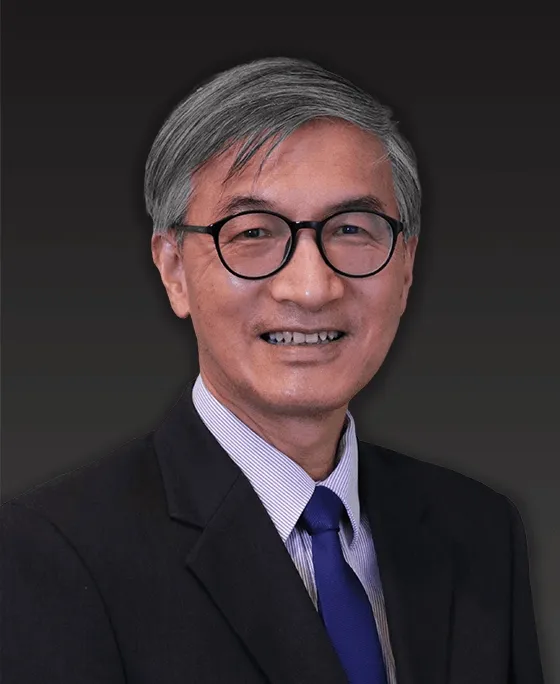 |
|
Prof. Tung-Chai (Bill) LING | 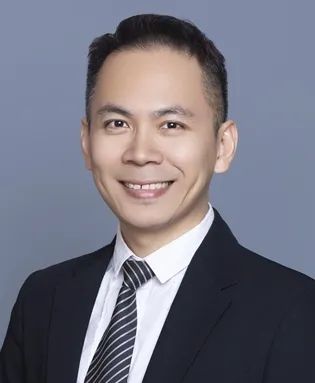 |
Content of the lecture:
Net Zero Concrete
The urgent need to decarbonize the construction sector is driving significant innovation in concrete technology. This presentation explores the forefront of low-carbon concrete development, focusing on integrated strategies to reduce its environmental footprint drastically. Key areas covered in the presentation will include the formulation and application of novel low-carbon cements (such as waste-derived and carbonizable cements) and the utilization of carbon-captured supplementary cementitious materials (SCMs), in which industrial by-products or novel materials treated with captured CO2 replace high-emission clinker. The advances in low-carbon ultra-high-performance concrete and low-carbon lightweight concrete mixes will also be introduced. The presentation will also highlight CO2 utilization technologies and their related applications, including direct CO2 mixing, CO2 foaming, and accelerated CO2 curing, which permanently mineralize CO2 within the concrete matrix, enhancing early strength while sequestering carbon. This overview demonstrates that a synergistic approach combining advanced materials, carbon capture and utilization (CCU), and innovative processes offers a viable pathway to achieve high-performance, low-carbon concrete for a sustainable built environment.
|
Prof. Alejandro Fernandez-Martinez Alejandro Fernández-Martínez is a CNRS Research Scientist at ISTerre (Grenoble, France), working at the interface of geochemistry, mineralogy, and materials science. His research focuses on the mechanisms controlling mineral nucleation, growth, and reactivity at the nanoscale, with particular emphasis on carbonate formation and CO₂ mineralization in cementitious systems. He has expertise on the use of synchrotron X-rays and neutron scattering to probe nanoscale mechanisms underlying environmental and crystallization processes. He has made key contributions to the understanding of non-classical nucleation pathways, metastable precursors, and interfacial processes under controlled humidity conditions. He has authored over 100 peer-reviewed publications (h-index 41), co-supervised over 15 PhD students and 7 postdocs. He received the CNRS Bronze Medal in 2021. |  |
Content of the lecture:
CaCO₃ Crystallization Pathways at Interfaces: Rethinking Cement Carbonation
Carbonation of cementitious materials is commonly described as a diffusion-controlled process followed by equilibrium precipitation of calcium carbonate. However, this view does not explain the strong variability in polymorph selection and kinetics observed in practice.
In this presentation, I will present a pathway-based perspective on CaCO₃ formation, where carbonation is governed by nanoscale interfacial processes. Rather than a direct transition to crystalline phases, CaCO₃ forms through metastable intermediates such as prenucleation clusters, amorphous phases, and surface-bound species. These pathways are strongly influenced by interfacial water and by the physicochemical history of the material.
Recent results show that thermal pre-treatment and hydration state can induce distinct crystallization pathways, leading to different polymorphs and carbonation behaviors. This suggests that carbonation is a path-dependent process, opening the way toward a more predictive and potentially programmable approach to CO₂ mineralization in cementitious systems.
|
Dr. Maciej Zając Maciej Zajac is Team Leader Scientific Coordination at Heidelberg Materials Global R&D in Leimen. His research focuses on the new technologies for cement and concrete, including hydration mechanisms, supplementary cementitious materials, carbonation, concrete recycling and alternative methods of cement production. He combines fundamental materials science with industrial implementation and standardization.
| 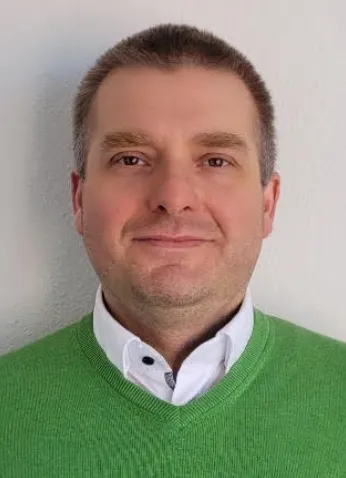 |
Content of the lecture:
Synergistic Hydration of Carbonated Recycled Concrete Paste and Conventional SCMs in Composite Cements
Carbonated recycled concrete paste (cRCP) is an emerging SCM that combines CO₂ mineralization with clinker reduction. This contribution discusses hydration of cements incorporating cRCP, from binary Portland clinker-cRCP blends to multicomponent systems with calcined clay or slag. Carbonation transforms hydrated cement paste into calcium carbonate and a highly reactive alumina-silica gel. During early hydration, this gel reacts rapidly with portlandite, promotes C-(A)-S-H formation, stabilizes carbonate-AFm phases, and refines the pore structure. This early reaction distinguishes cRCP from limestone fillers and from conventional, slower pozzolans. At later ages, paste performance depends on the available calcium reservoir and on the accompanying SCM. Calcined-clay systems can become calcium-limited at very low clinker contents, whereas slag can sustain hydrate formation through its latent hydraulic reaction. Therefore strength evolution is controlled not only by reaction degree, but by hydrate distribution, pore refinement, and cumulative water redistribution within the hardened microstructure. This provides a design framework.