


Doctoral School
Doctoral school is planned for students interested in cutting-edge science in carbonation on cement & concrete research. The tentative program is as follows:
Morning 9:30-12:00
1. Prof. Ippei Maruyama (General carbonation and introduction of Japan activity) 9:30~10:30
2. Prof. Thomas Matschei (Cement hydration, SCMs) 10:45~12:00
Afternoon 13:30-17:30
3. Dr. Takahiro Ohkubo (DFT, MD) 13:30~14:45
4. Dr. Ryo Kurihara (1H-NMR Relaxometry) 15:00~16:00
5. Dr. Maciej Zając (Carbonation Hardening) 16:15~17:30
|
Date: |
27th September, 2026 |
|
Venue: |
HASEKO-KUMA Hall, the University of Tokyo, Hongo Campus, 7-3-1, |
|
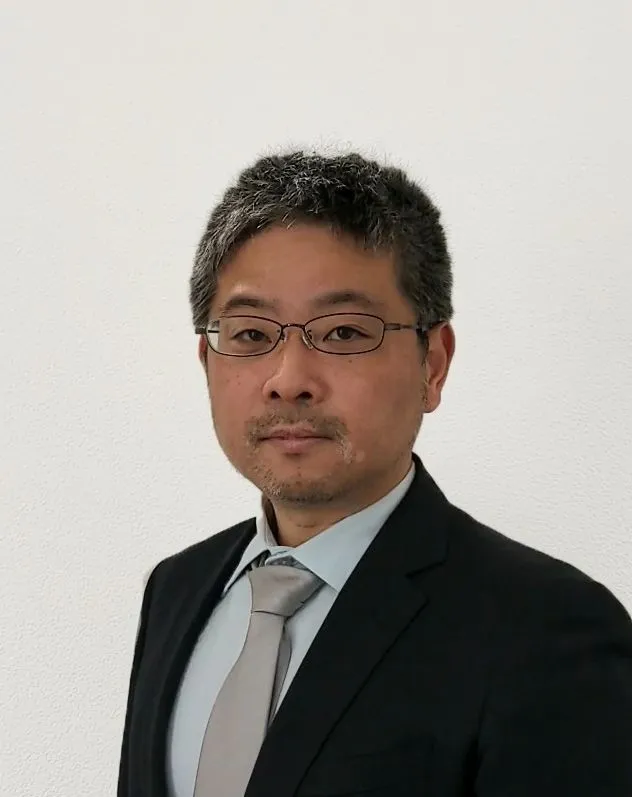
Prof. Ippei Maruyama Conference Chair, the University of Tokyo Lecture: Particular emphasis will be placed on the coupled transport of moisture and CO₂ within porous cementitious materials and the resulting carbonation processes. Through selected examples from both fundamental and applied research, the lecture will introduce recent findings that have advanced our understanding of these coupled physicochemical phenomena and discuss how this knowledge serves as the scientific foundation for the development of mineralization technologies and carbonation hardening.
|  |
|
Prof. Thomas Matschei TU Braunschweig, Construction Materials and head of the Building Materials Division at the Institute for Building Materials, Concrete Structures and Fire Safety (iBMB)
Lecture: Decarbonizing concrete relies on fundamentally redesigning modern cements through changing its mineralogy by the incorporation of supplementary cementitious materials (SCMs). This will lead to the formation of complex phase assemblages which can be assessed with tools such as thermodynamic modelling. This lecture provides a detailed thermodynamic framework to explore the coupled processes of hydration and mineral carbonation in low-clinker binder systems. Beginning with the relationship between cement mineralogy and sustainability, the role of SCMs in altering phase development and chemical equilibria is examined. Core thermodynamic principles governing phase stability are applied to evaluate the carbonation susceptibility of key anhydrous phases—including alite, belite, aluminate, ferrite, as well as reactive SCMs and hydrate phases. By evaluating mass and volume balances alongside pore solution evolution, the impact of hydration and carbonation on phase assemblages and microstructural space is traced. Finally, the dynamic competition between hydration and carbonation kinetics is discussed, offering a qualitative and quantitative baseline for phase prediction and material design in modern cementitious systems.
|  |
|
Dr. Maciej Zając Team Leader Scientific Coordination, Global Research & Development and Innovation, Heidelberg Materials AG
Carbonation hardening is a CO₂-curing technology in which clinker phases and early hydrates react with dissolved CO₂ to form calcium carbonate, silica-rich gels and, depending on curing history, secondary hydrate phases. This lecture introduces the mechanism from Portland cement to Portland-limestone and belitic systems. The dominant process is not ordinary hydration acceleration, but a coupled dissolution, carbonation and rehydration sequence controlled by CO₂ access, water availability, carbonate precipitation and remaining clinker reactivity. In Portland cements, alite and belite carbonation, partial C-S-H decalcification and subsequent hydrate formation refine the microstructure and improve early strength. Limestone mainly modifies carbonate availability and dilution, while belitic binders require carbonation to overcome intrinsically slow hydration. The talk will separate thermodynamic driving forces from kinetic limitations, discuss pore blocking and scale-up constraints, and evaluate where carbonation hardening is scientifically robust, industrially useful, or still unresolved for precast and low-CO₂ cement production.
|  |
|
Dr. Takahiro Ohkubo
|  |
|
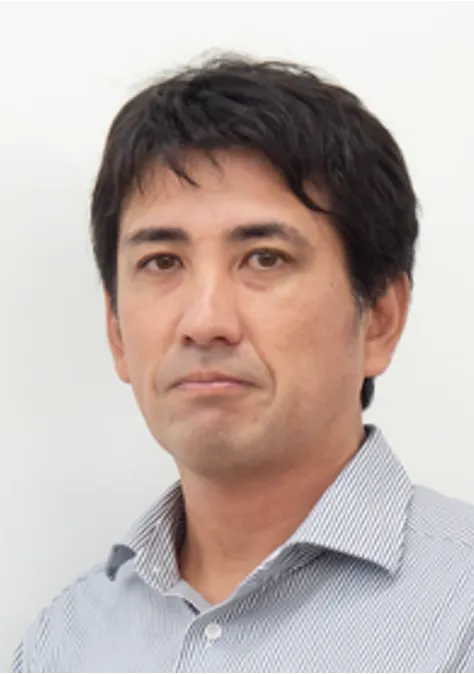
Dr. Ryo Kurihara Department of Architecture, Graduate School of Engineering, The University of Tokyo 1H NMR relaxometry has been widely applied to evaluate the pore structure of cementitious materials. As this technique does not require sample pre-treatment, it offers significant advantages for investigating C-S-H gel structures compared to other experimental methods. In this lecture, I will outline the fundamental principles of 1H NMR relaxometry, including common pulse sequences and key assumptions for interpreting pore structures. Furthermore, I will introduce landmark studies and recent applications in the field of cement chemistry, followed by a discussion on current challenges. |  |